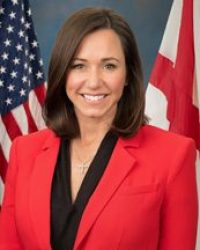
Katie Boyd Britt
Score
Complete Vote History
ObamaCare Subsidy Extension Senate
S 3385 ObamaCare Subsidy Extension (Cloture Rejected 51 to 48 on 12/11/2025, Roll Call 644). Extends enhanced ObamaCare subsidies by an additional three years. See U.S. Const., Art. I, Sec. 8.
Venezuela Senate
S J Res 90 Venezuela (Rejected 49 to 51 on 11/6/2025, Roll Call 608). Prevents military action within or against Venezuela without a congressional declaration of war. See U.S. Const., Art. I, Sec. 8.
S J Res 80 Alaska Petroleum Reserve Rule (Passed 52 to 45 on 10/30/2025, Roll Call 599). Overturns a 2022 Bureau of Land Management rule for the 23-million-acre National Petroleum Reserve in Alaska. See U.S. Const., Art. I, Sec. 8 & Art. IV, Sec. 3.
S J Res 80 Alaska Petroleum Reserve Rule (Passed 52 to 45 on 10/30/2025, Roll Call 599). Overturns a 2022 Bureau of Land Management rule for the 23-million-acre National Petroleum Reserve in Alaska. See U.S. Const., Art. I, Sec. 8 & Art. IV, Sec. 3.
Senator Rand Paul’s (R-Ky.) amendment to S 2296 Federal Reserve Interest Payments (Rejected 14 to 83 on 10/9/2025, Roll Call 562). Prohibits any Federal Reserve bank from paying interest on reserve balances that are maintained at a Federal Reserve bank by or on behalf of a big bank or another depository institution. See U.S. Const., Art. I, Sec. 8.
Senator Rand Paul’s (R-Ky.) amendment to S 2296 Federal Reserve Interest Payments (Rejected 14 to 83 on 10/9/2025, Roll Call 562). Prohibits any Federal Reserve bank from paying interest on reserve balances that are maintained at a Federal Reserve bank by or on behalf of a big bank or another depository institution. See U.S. Const., Art. I, Sec. 8.
Budget Resolution Senate
S Con Res 22 Budget Resolution (Rejected 36 to 62 on 9/16/2025, Roll Call 521). Cuts six percent of all federal spending. See U.S. Const., Art. I, Sec. 8.
Reducing Agriculture Funding Senate
Senator John Kennedy’s (R-La.) amendment to HR 3944 Reducing Agriculture Funding (Rejected 14 to 81 on 8/1/2025, Roll Call 476). Reduces discretionary spending in the agriculture appropriations component of the bill by two percent across the board. See U.S. Const., Art. I, Sec. 8.
Senator John Kennedy’s (R-La.) amendment to HR 3944 Reducing Agriculture Funding (Rejected 14 to 81 on 8/1/2025, Roll Call 476). Reduces discretionary spending in the agriculture appropriations component of the bill by two percent across the board. See U.S. Const., Art. I, Sec. 8.
Fiscal 2025 Rescissions Senate
HR 4 Fiscal 2025 Rescissions (Passed 51 to 48 on 7/17/2025, Roll Call 411). Rescinds $9 billion in funding previously appropriated by Congress for fiscal 2025. See U.S. Const., Art. I, Sec. 8.
Ending “Green” Subsidies Senate
Senator Mike Lee's (R-Utah) amendment to HR 1 Ending "Green" Subsidies (Rejected 21 to 79 on 7/1/2025, Roll Call 360). Ends federal tax credits for projects utilizing battery and energy-storage technologies. See U.S. Const., Art. I, Sec. 8.
GENIUS Act Senate
S 1582 GENIUS Act (Passed 68 to 30 on 6/17/2025, Roll Call 318). Imposes new federal regulations on cryptocurrency stablecoins. See U.S. Const., Art. I, Sec. 8.
H J Res 42 Appliance Efficiency Regulations (Passed 52 to 46 on 4/30/2025, Roll Call 223). Overturns a Department of Energy rule imposing new efficiency-standard certification, labeling, and enforcement requirements for dozens of appliances. See U.S. Const., Art. I, Sec. 8.
H J Res 42 Appliance Efficiency Regulations (Passed 52 to 46 on 4/30/2025, Roll Call 223). Overturns a Department of Energy rule imposing new efficiency-standard certification, labeling, and enforcement requirements for dozens of appliances. See U.S. Const., Art. I, Sec. 8.
Water-heater Rule Senate
H. J. Res. 20 Water-heater Rule (Passed 53 to 44 on 4/10/2025, Roll Call 207). Would overturn a 2024 Department of Energy rule, titled "Energy Conservation Program: Energy Conservation Standards for Consumer Gas-fired Instantaneous Water Heaters," that imposed new requirements on gas-fired instantaneous water heaters and effectively banned the sale of non-condensing models.
H. J. Res. 20 Water-heater Rule (Passed 53 to 44 on 4/10/2025, Roll Call 207). Would overturn a 2024 Department of Energy rule, titled "Energy Conservation Program: Energy Conservation Standards for Consumer Gas-fired Instantaneous Water Heaters," that imposed new requirements on gas-fired instantaneous water heaters and effectively banned the sale of non-condensing models.
Minimum-wage Increase Senate
H. Con. Res. Minimum-wage Increase (Rejected 47 to 52 on 4/5/2025, Roll Call 184). During consideration of a budget resolution for fiscal 2025 (House Concurrent Resolution 14), Senator Bernie Sanders (I-Vt.) offered an amendment to increase the federal minimum wage to at least $17 an hour over five years.
H. Con. Res. Minimum-wage Increase (Rejected 47 to 52 on 4/5/2025, Roll Call 184). During consideration of a budget resolution for fiscal 2025 (House Concurrent Resolution 14), Senator Bernie Sanders (I-Vt.) offered an amendment to increase the federal minimum wage to at least $17 an hour over five years.
Debt Ceiling Senate
Sen. Paul's amendment to HR 1968 Debt Ceiling (Rejected 5 to 94 on 4/4/2025, Roll Call 179). Reduces the bill's increase in the debt limit from $4 trillion to $500 billion.
USAID Funding Cuts Senate
Sen. Paul's amendment to HR 1968 USAID Funding Cuts (Rejected 27 to 73 on 2/21/2025, Roll Call 77). Reduces funding levels for the U.S. Agency for International Development (USAID). See U.S. Const., Art. I, Sec. 8.
Protecting Women’s Sports Senate
S 9 Protecting Women's Sports (Rejected 51 to 45 on 3/3/2025, Roll Call 100). Would ensure that only real (i.e., biological) women and girls compete in women's sports that are operated, sponsored, or facilitated by federal funding. "Transgender" women and girls — i.e., biological males who "identify," or pose, as females — would be prohibited from competing.
S 9 Protecting Women's Sports (Rejected 51 to 45 on 3/3/2025, Roll Call 100). Would ensure that only real (i.e., biological) women and girls compete in women's sports that are operated, sponsored, or facilitated by federal funding. "Transgender" women and girls — i.e., biological males who "identify," or pose, as females — would be prohibited from competing.
EPA Emissions Rule Senate
H J Res 35 EPA Emissions Rule (Passed 52 to 47 on 2/27/2025, Roll Call 97). Overturns an EPA rule that imposed annual fees on oil and gas facilities that emit methane above certain thresholds. See U.S. Const., Art. I, Sec. 8.
Deficit Reduction Senate
Senator Rand Paul's (R-Ky.) amendment to S Con Res 7 Deficit Reduction (Rejected 24 to 76 on 2/21/2025, Roll Call 77). Reduces the deficit by approximately $1.4 trillion through fiscal 2034. See U.S. Const., Art. I, Sec. 8.
Senator Ben Ray Luján's (D-N.M.) amendment to S Con Res 7 Federal Funding for Law Enforcement (Rejected 48 to 52 on 2/21/2025, Roll Call 81). Increases federal funding for local law enforcement by funding the COPS Hiring Program. See U.S. Const., Art. I, Sec. 8.
Senator Ben Ray Luján's (D-N.M.) amendment to S Con Res 7 Federal Funding for Law Enforcement (Rejected 48 to 52 on 2/21/2025, Roll Call 81). Increases federal funding for local law enforcement by funding the COPS Hiring Program. See U.S. Const., Art. I, Sec. 8.
In Vitro Fertilization Senate
Senator Tammy Duckworth's (D-Ill.) amendment to S Con Res 7 In Vitro Fertilization (Rejected 49 to 51 on 2/21/2025, Roll Call 82). Protects access to "reproductive healthcare," including "fertility treatment services" such as in vitro fertilization (IVF). See U.S. Const., Art. I, Sec. 8.
Senator Tammy Duckworth's (D-Ill.) amendment to S Con Res 7 In Vitro Fertilization (Rejected 49 to 51 on 2/21/2025, Roll Call 82). Protects access to "reproductive healthcare," including "fertility treatment services" such as in vitro fertilization (IVF). See U.S. Const., Art. I, Sec. 8.
S 6 Medical Care for Abortion Survivors (Rejected 52 to 47 on 1/22/2025, Roll Call 11). The U.S. Constitution does not grant a right to abortion. Abortion is not healthcare, it is the ending of innocent human life, and the Declaration of Independence affirms the right to life as a fundamental, God-given, and inherent right.
S 6 Medical Care for Abortion Survivors (Rejected 52 to 47 on 1/22/2025, Roll Call 11). The U.S. Constitution does not grant a right to abortion. Abortion is not healthcare, it is the ending of innocent human life, and the Declaration of Independence affirms the right to life as a fundamental, God-given, and inherent right.
Continuing Appropriations Senate
HR 10545 Continuing Appropriations (Passed 85 to 11 on 12/21/2024, Roll Call 339). Extends federal funding through March 14, 2025. See U.S. Const., Art. I, Sec. 8.
Canceling Ukrainian Debt Senate
S J Res 117 Canceling Ukrainian Debt (Rejected 37 to 61 on 11/20/2024, Roll Call 295). Disapproves of President Biden's plan to cancel $4.65 billion in Ukrainian debt.
In Vitro Fertilization Senate
S 4445 In Vitro Fertilization (Rejected 51 to 44 on 9/17/2024, Roll Call 242). Would, in the words of the bill, "protect and expand nationwide access to fertility treatment, including in vitro fertilization."
Consumer Furnaces Rule Senate
S. J. Res. Consumer Furnaces Rule (Passed 50 to 45 on 5/21/2024, Roll Call 176). Senate Joint Resolution 58 would reverse a December 2023 Department of Energy rule setting stricter energy-efficiency standards for non-weatherized and mobile-home gas furnaces at 95-percent annual fuel utilization efficiency.
S. J. Res. Consumer Furnaces Rule (Passed 50 to 45 on 5/21/2024, Roll Call 176). Senate Joint Resolution 58 would reverse a December 2023 Department of Energy rule setting stricter energy-efficiency standards for non-weatherized and mobile-home gas furnaces at 95-percent annual fuel utilization efficiency.
PN 927 Courtney Diesel O'Donnell Nomination (Confirmed 49 to 45 on 5/15/2024, Roll Call 164). President Joe Biden nominated Courtney Diesel O'Donnell to serve as the U.S. permanent representative to the United Nations Educational, Scientific and Cultural Organization (UNESCO), with the rank of ambassador.
PN 927 Courtney Diesel O'Donnell Nomination (Confirmed 49 to 45 on 5/15/2024, Roll Call 164). President Joe Biden nominated Courtney Diesel O'Donnell to serve as the U.S. permanent representative to the United Nations Educational, Scientific and Cultural Organization (UNESCO), with the rank of ambassador.
Foreign Aid Package Senate
HR 815 Foreign Aid Package (Passed 79 to 18 on 4/23/2024, Roll Call 154). Provides a total of $95.3 billion in “emergency” aid for Ukraine, Israel, and Taiwan. See U.S. Const., Art. I, Sec. 8.
FISA Reauthorization Senate
HR 7888 FISA Reauthorization (Passed 60 to 34 on 4/20/2024, Roll Call 150). Would reauthorize for two years, until 2026, Title VII of the Foreign Intelligence Surveillance Act (FISA), which governs electronic surveillance of foreign terrorism suspects.
HR 7888 FISA Reauthorization (Passed 60 to 34 on 4/20/2024, Roll Call 150). Would reauthorize for two years, until 2026, Title VII of the Foreign Intelligence Surveillance Act (FISA), which governs electronic surveillance of foreign terrorism suspects.
Surveilling U.S. Citizens Senate
Sen. Rand Paul's (R-Ky.) amendment to HR 7888 Surveilling U.S. Citizens (Rejected 11 to 81 on 4/19/2024, Roll Call 147). Prohibits federal officials from requesting orders under FISA to surveil U.S. persons, among other provisions. See U.S. Const., amend. 4.
Sen. Rand Paul's (R-Ky.) amendment to HR 7888 Surveilling U.S. Citizens (Rejected 11 to 81 on 4/19/2024, Roll Call 147). Prohibits federal officials from requesting orders under FISA to surveil U.S. persons, among other provisions. See U.S. Const., amend. 4.
EPA Tailpipe Emissions Rule Senate
S 4072 EPA Tailpipe Emissions Rule (Rejected 52 to 46 on 4/18/2024, Roll Call 142). Prohibits the use of fiscal 2024 funding to implement or enforce EPA rules on tailpipe emissions for vehicles. See U.S. Const., Art. I, Sec. 8.
Greenhouse Gas Emissions Senate
S J Res 61 Greenhouse Gas Emissions (Passed 53 to 47 on 4/10/2024, Roll Call 121). Would reverse a December 2023 Federal Highway Administration (FHWA) rule that requires state transportation agencies to set targets for reducing transportation-related greenhouse-gas emissions and report to the FHWA on their progress.
S J Res 61 Greenhouse Gas Emissions (Passed 53 to 47 on 4/10/2024, Roll Call 121). Would reverse a December 2023 Federal Highway Administration (FHWA) rule that requires state transportation agencies to set targets for reducing transportation-related greenhouse-gas emissions and report to the FHWA on their progress.
Free Speech Senate
Sen. Eric Schmitt's (R-Mo.) amendment to HR 2882 Free Speech (Rejected 47 to 51 on 3/23/2024, Roll Call 109). Prohibits funds from being used by the federal government to label speech as “disinformation or misinformation” or to coerce online platforms to censor such speech. See U.S. Const., amend. 1.
Sen. Eric Schmitt's (R-Mo.) amendment to HR 2882 Free Speech (Rejected 47 to 51 on 3/23/2024, Roll Call 109). Prohibits funds from being used by the federal government to label speech as “disinformation or misinformation” or to coerce online platforms to censor such speech. See U.S. Const., amend. 1.
Consolidated Appropriations Senate
HR 2882 Consolidated Appropriations (Passed 74 to 24 on 3/23/2024, Roll Call 114). Appropriates $1.2 trillion in total funding for fiscal 2024. See U.S. Const., Art. I, Sec. 8.
Spending Reductions Senate
Sen. Paul's amendment to HR 2882 Spending Reductions (Rejected 34 to 63 on 3/23/2024, Roll Call 106). Reduces spending by 5 percent, excluding military and border funding. See U.S. Const., Art. I, Sec. 8.
Migrant Parole Program Senate
Sen. Bill Hagerty's (R-Tenn.) amendment to HR 2882 Migrant Parole Program (Rejected 47 to 51 on 3/23/2024, Roll Call 112). Prohibits funding in the bill from being used to fly illegal migrants into the United States. See U.S. Const., Art. I, Sec. 8.
CBP One App Senate
Migrants who do not satisfy the conditions for asylum are often, upon their entry into the United States and release from custody, granted parole for up to two years under Title 8 of the Immigration and Nationality Act, making them eligible for work permits. Given that aliens are presumed to be ineligible for asylum if they enter the United States unlawfully after failing to seek refuge in a third country (e.g., Mexico), the CBP One app has effectively become a fraudulent gateway for millions of illegal migrants. Article I, Section 8 of the Constitution stipulates that Congress shall have the power to “establish a uniform Rule of Naturalization,” and Article II, Section 3 requires the president to “take Care that the Laws be faithfully executed.”
Migrants who do not satisfy the conditions for asylum are often, upon their entry into the United States and release from custody, granted parole for up to two years under Title 8 of the Immigration and Nationality Act, making them eligible for work permits. Given that aliens are presumed to be ineligible for asylum if they enter the United States unlawfully after failing to seek refuge in a third country (e.g., Mexico), the CBP One app has effectively become a fraudulent gateway for millions of illegal migrants. Article I, Section 8 of the Constitution stipulates that Congress shall have the power to “establish a uniform Rule of Naturalization,” and Article II, Section 3 requires the president to “take Care that the Laws be faithfully executed.”
The purpose of the U.S. Census is to determine the allotment of congressional seats and Electoral College votes for each state. Illegal aliens, who are not U.S. citizens, should not be counted toward determining those numbers. Furthermore, changing the demographics of a congressional district or state also changes the voting patterns of those areas.
The purpose of the U.S. Census is to determine the allotment of congressional seats and Electoral College votes for each state. Illegal aliens, who are not U.S. citizens, should not be counted toward determining those numbers. Furthermore, changing the demographics of a congressional district or state also changes the voting patterns of those areas.
Consolidated Appropriations Senate
HR 4366 Consolidated Appropriations (Passed 75 to 22 on 3/8/2024, Roll Call 84). Appropriates $467.5 billion in federal funding for fiscal 2024. See U.S. Const., Art. I, Sec. 8.
Federal Reserve Activities Senate
Senator Rand Paul's (R-Ky.) amendment to HR 7463 Federal Reserve Activities (Rejected 37 to 53 on 2/29/2024, Roll Call 63). Prohibits the Federal Reserve from purchasing or selling the debt of any state or municipality. See U.S. Const., Art. I, Sec. 8 and Art. I, Sec. 10.
Senator Rand Paul's (R-Ky.) amendment to HR 7463 Federal Reserve Activities (Rejected 37 to 53 on 2/29/2024, Roll Call 63). Prohibits the Federal Reserve from purchasing or selling the debt of any state or municipality. See U.S. Const., Art. I, Sec. 8 and Art. I, Sec. 10.
U.S. Military in Syria Senate
Under the U.S. Constitution, the power to declare war belongs to Congress, and the United States should follow a policy of noninterventionism, minding its own business in foreign affairs.
Student Loan Repayment Rule Senate
S J Res 43 Student Loan Repayment Rule (Rejected 49 to 50 on 11/15/2023, Roll Call 310). Formally disapproves of an unconstitutional Department of Education rule to repay and forgive student loans. See U.S. Const., Art. I, Sec. 8.
Spending Reductions Senate
Sen. Paul's (R-Ky.) amendment to HR 6363 Spending Reductions (Rejected 32 to 65 on 11/15/2023, Roll Call 311). Reduces funding in the bill for most federal agencies by 15 percent, and rescinds $30 billion in IRS enforcement funds. See U.S. Const., Art. I, Sec. 8.
Sen. Paul's (R-Ky.) amendment to HR 6363 Spending Reductions (Rejected 32 to 65 on 11/15/2023, Roll Call 311). Reduces funding in the bill for most federal agencies by 15 percent, and rescinds $30 billion in IRS enforcement funds. See U.S. Const., Art. I, Sec. 8.
HR 4366 Consolidated Appropriations Minibus (Passed 82 to 15 on 11/1/2023, Roll Call 284). Provides roughly $279 billion in spending for three of the 12 fiscal 2024 appropriations bills. See U.S. Const., Art. I, Sec. 8.
Audit the Fed Senate
Sen. Rand Paul's (R-Ky.) amendment to HR 4366 Audit the Fed (Rejected 46 to 51 on 11/1/2023, Roll Call 280). Requires a full audit of the Federal Reserve System.
U.S. Military in Niger Senate
The deployment of U.S. forces to Niger was not specifically authorized by Congress, and under the Constitution only Congress has the power to declare war.
Mask Mandates Senate
The federal government has no authority under the Constitution to impose mask mandates.
Continuing Resolution Senate
HR 5860 Continuing Resolution (Passed 88 to 9 on 9/30/2023, Roll Call 247). Appropriates federal funding at bloated fiscal 2023 levels. See U.S. Const., Art. I, Sec. 8.
Declaration of War Senate
Sen. Rand Paul's (R-Ky.) amendment to S 2226 Declaration of War (Rejected 16 to 83 on 7/19/2023, Roll Call 191). Recognizes that the North Atlantic Treaty “does not supersede the constitutional requirement that Congress declare war.” See U.S. Const., Art. I, Sec. 8.
Sen. Rand Paul's (R-Ky.) amendment to S 2226 Declaration of War (Rejected 16 to 83 on 7/19/2023, Roll Call 191). Recognizes that the North Atlantic Treaty “does not supersede the constitutional requirement that Congress declare war.” See U.S. Const., Art. I, Sec. 8.
ATF Firearm Brace Rule Senate
H J Res 44 ATF Firearm Brace Rule (Rejected 49 to 50 on 6/22/2023, Roll Call 171). Formally disapproves of an unconstitutional ATF rule expanding the definition of a “short-barreled rifle.” See U.S. Const., amend. 2.
The federal government has no authority under the Constitution to implement environmental regulations. Furthermore, the EPA’s rule feeds right into the climate-change hoax and, by extension, the UN’s Agenda 2030, and would impose onerous regulations on businesses.
The federal government has no authority under the Constitution to implement environmental regulations. Furthermore, the EPA’s rule feeds right into the climate-change hoax and, by extension, the UN’s Agenda 2030, and would impose onerous regulations on businesses.
Spending Reductions Senate
Sen. Paul's (R-Ky.) amendment to HR 3746 Spending Reductions (Rejected 21 to 75 on 6/1/2023, Roll Call 136). Decreases federal spending from $4.8 to $3.9 trillion over four years. See U.S. Const., Art. I, Sec. 8.
Bipartisan Debt-limit Deal Senate
HR 3746 Bipartisan Debt-limit Deal (Passed 63 to 36 on 6/1/2023, Roll Call 146). Suspends the debt limit through January 1, 2025 and create caps on “discretionary” spending for fiscal years 2024 and 2025, among many other dubious changes. See U.S. Const., Art. I, Sec. 8.
HR 3746 Bipartisan Debt-limit Deal (Passed 63 to 36 on 6/1/2023, Roll Call 146). Suspends the debt limit through January 1, 2025 and create caps on “discretionary” spending for fiscal years 2024 and 2025, among many other dubious changes. See U.S. Const., Art. I, Sec. 8.
Equal Rights Amendment Senate
The claim that the ERA is a “valid … part of the Constitution” is a sham. When Congress submitted the ERA to the states for ratification in 1972, it set a seven-year ratification period that ended on March 22, 1979. During that period, 35 states ratified the ERA, but four of those states reconsidered and rescinded their ratifications. This left the ERA seven states short of the three-fourths majority (38 states) needed to become part of the Constitution. Prior to the deadline, when it became apparent the 38-state threshold would not be reached, Congress extended the deadline to June 30, 1982. This legally dubious extension caused a fifth state to rescind, and during the extension period no new states ratified. In recent years, three new states have ratified the ERA. But to claim that this makes the ERA part of the Constitution is to ignore the long-expired deadlines, as well as the five states that rescinded.
The claim that the ERA is a “valid … part of the Constitution” is a sham. When Congress submitted the ERA to the states for ratification in 1972, it set a seven-year ratification period that ended on March 22, 1979. During that period, 35 states ratified the ERA, but four of those states reconsidered and rescinded their ratifications. This left the ERA seven states short of the three-fourths majority (38 states) needed to become part of the Constitution. Prior to the deadline, when it became apparent the 38-state threshold would not be reached, Congress extended the deadline to June 30, 1982. This legally dubious extension caused a fifth state to rescind, and during the extension period no new states ratified. In recent years, three new states have ratified the ERA. But to claim that this makes the ERA part of the Constitution is to ignore the long-expired deadlines, as well as the five states that rescinded.
Federal Firefighter Grants Senate
S 870 Federal Firefighter Grants (Passed 95 to 2 on 4/20/2023, Roll Call 94). Unconstitutionally authorizes $95 million annually through fiscal 2030 for the USFA, increasing funding levels by 24 percent. See U.S. Const., Art. I, Sec. 8.
Abortion Senate
S J Res 10 Abortion (Rejected 48 to 51 on 4/19/2023, Roll Call 90). Overturns the Department of Veterans Affairs rule allowing medical coverage for abortion counseling and procedures. See U.S. Const., amends. 5 & 14.
Federal Water Rule Senate
Both federal water regulations and the EPA are unconstitutional, and if the latest Biden administration rule were allowed to stand, activities such as farming and real estate development would be greatly hampered, since farmers and developers would be subject to increased unconstitutional permit requirements and fines concerning their treatment of almost any body of water, no matter how small.
Both federal water regulations and the EPA are unconstitutional, and if the latest Biden administration rule were allowed to stand, activities such as farming and real estate development would be greatly hampered, since farmers and developers would be subject to increased unconstitutional permit requirements and fines concerning their treatment of almost any body of water, no matter how small.
It is unconstitutional to suspend the Constitution by declaring national public-health emergencies.
WHO Pandemic Treaty Senate
In recent decades both the Executive Branch and Congress have regularly skirted the constitutional requirement in Article II, Section 2 of the U.S. Constitution that treaties have to be made with the “Advice and Consent of the Senate … provided two thirds of the Senators present concur.” Instead of recognizing agreements as treaties, they unconstitutionally designate them as “executive agreements,” thereby enabling the president and Congress to avoid seeking the advice and consent of the Senate and pass them by a simple majority of the House and Senate, rather than the more rigorous threshold of two-thirds of the senators present.
In recent decades both the Executive Branch and Congress have regularly skirted the constitutional requirement in Article II, Section 2 of the U.S. Constitution that treaties have to be made with the “Advice and Consent of the Senate … provided two thirds of the Senators present concur.” Instead of recognizing agreements as treaties, they unconstitutionally designate them as “executive agreements,” thereby enabling the president and Congress to avoid seeking the advice and consent of the Senate and pass them by a simple majority of the House and Senate, rather than the more rigorous threshold of two-thirds of the senators present.
2001 AUMF Repeal Senate
Senator Rand Paul's (R-Ky.) amendment to S 316 2001 AUMF Repeal (Rejected 9 to 86 on 3/22/2023, Roll Call 65). Repeals the unconstitutional 2001 Authorization for Use of Military Force. See U.S. Const., Art. I, Sec. 8.
ESG Fiduciary Rule Senate
H J Res 30 ESG Fiduciary Rule (Passed 50 to 46 on 3/1/2023, Roll Call 35). Overturns the Labor Department's rule allowing retirement-plan fiduciaries to use ESG. See U.S. Const., Art. I, Sec. 8.