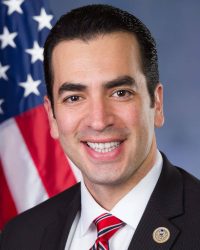
Ruben Kihuen
F
18%
Freedom Score
FreedomIndex.us
Session Voting Records
Reports
115th Congress
U.S. Congress: House
Score: 18
Gray Wolves
Decisions regarding human interaction with various animal species, if handled by government at all, should be handled at the state and local levels. The U.S. Constitution does not give the federal government the authority to declare animals endangered and thus off-limits to hunt or otherwise manage. The growing gray wolf population has been a menace to farmers and ranchers in many states, and farmers are not allowed to protect their own property owing to federal regulations. Working to overturn such regulations is a good thing.
Read More
Constitutional Vote: Yes
Vote Cast: No
Opioid Abuse Prevention and Health Programs
Expands Medicare and Medicaid to cover medication-assisted treatment for substance abuse.
Read More
Constitutional Vote: No
Vote Cast: Yes
Tax Cuts
Would make permanent the tax cuts for individuals in the Tax Cuts and Jobs Act of 2017 that were set to expire at the end of 2025.
Read More
Constitutional Vote: Yes
Vote Cast: No
FAA Reauthorization and Supplemental Disaster Appropriations
Reauthorizes appropriations for the FAA and TSA, as well as $1.7 billion for Hurricane Florence disaster relief.
Read More
Constitutional Vote: No
Vote Cast: Yes
Cost per household: -$13,168.00/year
Appropriations for Defense, Labor-HHS-Education, and Continuing Appropriations
Would provide $855.1 billion in discretionary funding for fiscal 2019.
Read More
Constitutional Vote: No
Vote Cast: Yes
Cost per household: -$10,403.00/year
Flood Insurance
The Constitution does not give the federal government authority to get into the insurance business. Having the federal government as an insurer essentially subsidizes risky behavior, such as building in flood-, fire-, and earthquake-prone areas, and forces the taxpayer to pick up the tab. Insurance policies for natural disasters should be offered by private insurers, with the market setting the rates for such coverage.
Read More
Constitutional Vote: No
Vote Cast: Yes
Medical Device Tax Repeal
This particular excise tax was put in place to help pay for an unconstitutional program — the Affordable Care Act, aka ObamaCare. Repealing part of the funding for such an unconstitutional federal healthcare program is a good thing and should be supported.
Read More
Constitutional Vote: Yes
Vote Cast: No
Carbon Tax
Declares that a carbon tax would be "detrimental to American families and businesses" and "not in the best interest of the United States."
Read More
Constitutional Vote: Yes
Vote Cast: No
Emissions Standards
The Constitution does not authorize the federal government to regulate the environment in general, let alone regulate methane emissions that accompany oil and natural gas production, processing, and distribution.
Read More
Constitutional Vote: Yes
Vote Cast: No
Appropriations Cuts
Would cut nearly $15 billion from previously approved, unspent, and wasteful spending.
Read More
Constitutional Vote: Yes
Vote Cast: No
Benefit per household: +$118.00/year
Law Enforcement Partnership Grants
Authorizes $50 million a year from 2019-2021 for the Project Safe Neighborhoods Block Grant Program.
Read More
Constitutional Vote: No
Vote Cast: Yes
Experimental Drugs
Would allow patients with life-threatening conditions to seek access to experimental drugs directly from a manufacturer without FDA approval.
Read More
Constitutional Vote: Yes
Vote Cast: No
Waters of the United States
To repeal the Environmental Protection Agency's 2015 "Waters of the United States" rule.
Read More
Constitutional Vote: Yes
Vote Cast: No
Raw Milk
The U.S. Constitution does not give the federal government any authority over what foods a person chooses to consume. In other words, it is illegal for the federal government to make raw milk illegal. While the federal government does have authority to "regulate Commerce … among the several States," there is no reason for federal interference in a scenario such as this, where a product is legally sold in each of the states in question.
Read More
Constitutional Vote: Yes
Vote Cast: No
Agricultural Crop Subsidies
Would have phased out agricultural crop subsidies by fiscal year 2030.
Read More
Constitutional Vote: Yes
Vote Cast: No
Omnibus Appropriations
Would provide $1.3 trillion in wasteful and unconstitutional government spending.
Read More
Constitutional Vote: No
Vote Cast: No
Cost per household: -$10,189.00/year
School Violence
Would authorize $75 million a year through 2028 for the Justice Department's Secure Our Schools grant program.
Read More
Constitutional Vote: No
Vote Cast: Yes
World Bank
Would authorize $3.29 billion in foreign aid to the World Bank International Development Association.
Read More
Constitutional Vote: No
Vote Cast: No
Warrantless Surveillance
Would reauthorize the Foreign Intelligence Surveillance Act (FISA) through 2023, allowing secret FISA Court-approved surveillance of American citizens.
Read More
Constitutional Vote: No
Vote Cast: No
Warrantless Surveillance
To end NSA collection of communications data that is neither to nor from an approved foreign target, but rather communications "about" a foreign target entirely between American citizens.
Read More
Constitutional Vote: Yes
Vote Cast: Yes
Tax Cuts
Would cut the corporate income tax rate from 35 percent to 21 percent and individual income tax rates through 2025, and effectively eliminate the tax penalty on Americans who do not purchase health insurance.
Read More
Constitutional Vote: Yes
Vote Cast: No
Death Panel
The Constitution does not authorize the federal government to interfere in healthcare, let alone ration it by deciding who should and should not receive medical care.
Read More
Constitutional Vote: Yes
Vote Cast: Yes
Abortion
Bans abortion when the age of the pre-born baby is 20 weeks or longer.
Read More
Constitutional Vote: Yes
Vote Cast: None
Home Visitations
Going into homes to check up on the physical, emotional, and economic "wellness" of families not only goes way beyond the few and defined federal powers authorized by the Constitution, but also is part of a dangerous trend of government further interjecting itself into the family.
Read More
Constitutional Vote: No
Vote Cast: No
Fracking
Would effectively prohibit fracking in the Pacific outer continental shelf.
Read More
Constitutional Vote: No
Vote Cast: Yes
UN Human Rights Agencies
Prohibits the use of federal funds for making contributions to various UN human rights agencies.
Read More
Constitutional Vote: Yes
Vote Cast: No
Intelligence Authorization
Authorizes classified amounts of funding through fiscal 2018 for 16 U.S. intelligence agencies and intelligence-related activities, including the Office of the National Intelligence Director, the CIA, and the National Security Agency.
Read More
Constitutional Vote: No
Vote Cast: Yes
Ozone Standards
This bill provides temporary relief from having to immediately implement the new ozone reduction standards. Ideally, the EPA should be abolished and the Clean Air Act repealed, since both are unconstitutional infringements on state responsibilities.
Read More
Constitutional Vote: Yes
Vote Cast: No
NATO
"[S]olemnly reaffirms" the U.S. commitment to NATO based on principle of "collective defense."
Read More
Constitutional Vote: No
Vote Cast: Yes
Dodd-Frank Financial Regulations
Would overhaul financial industry regulations and repeal many provisions of the 2010 Dodd-Frank law.
Read More
Constitutional Vote: Yes
Vote Cast: No
National Computer Forensics Institute Authorization
Providing federal equipment and training to state and local law-enforcement officers not only is unconstitutional, but also further federalizes the police system.
Read More
Constitutional Vote: No
Vote Cast: Yes
ObamaCare Replacement
Would retain much of ObamaCare under the guise of "repeal and replace."
Read More
Constitutional Vote: No
Vote Cast: No
Omnibus Appropriations
Would provide $1.16 trillion in wasteful and unconstitutional government spending over the span of just under five months.
Read More
Constitutional Vote: No
Vote Cast: Yes
Cost per household: -$9,190.00/year
Homeland Security Defense of Agriculture
This bill expands the "War on Terror" to include the fictitious and non-existent threat of "agro-terrorism" in the American homeland, thereby further interjecting the U.S. government into the agriculture sector, despite the absence of any constitutional power to manage this or any other sector of the American economy.
Read More
Constitutional Vote: No
Vote Cast: Yes
Veteran Gun Purchases
Prohibits the U.S. government from preventing individuals from purchasing a gun simply by claiming the individual is "mentally incompetent."
Read More
Constitutional Vote: Yes
Vote Cast: No
Federal Family Planning
This bill limits the power of an unconstitutional federal government agency. The U.S. Constitution does not authorize the federal government to get involved in healthcare, much less establish a Department of Health and Human Services, so any attempt to limit the power of an unconstitutional federal agency is a step in the right direction.
Read More
Constitutional Vote: Yes
Vote Cast: No
Predator Control
This legislation reaffirms Alaska's sovereign power to manage its wildlife. Since the power of wildlife management was not granted to the federal government by the Constitution, it is reserved to Alaska and the other 49 states according to the 10th Amendment.
Read More
Constitutional Vote: Yes
Vote Cast: No
Stream Protection Rule
Would nullify the "Stream Protection Rule" issued in 2016 by the Interior Department's Office of Surface Mining Reclamation and Enforcement.
Read More
Constitutional Vote: Yes
Vote Cast: No
Federal Funding for Abortion
Would prohibit both federal funds and the District of Columbia's funds from being used to pay for abortions.
Read More
Constitutional Vote: Yes
Vote Cast: No
Major Regulations
Would require congressional approval before any "major rule" issued by an executive branch agency could go into effect.
Read More
Constitutional Vote: Yes
Vote Cast: No
Create a free account to save legislators to lists and create custom scorecards.
Create Free Account Log inAlready have a Freedom Index/JBS account?
You may add contact information to Scorecards, print and share them.
Do not make unauthorized changes to the Scorecards.
Leave unchecked for no personalization.
Save your contact info to a free account to reuse it on other legislator scorecards.
Save Your Contact Information for Next Time
Create a free account or log in to save multiple contacts for future use.
Privacy: Your information is saved locally in your browser and is only used to customize PDF scorecards. We do not collect or share this information with third parties.
Search Results

Get the FreedomIndex.us App
Install for faster access, or learn how this app experience works.