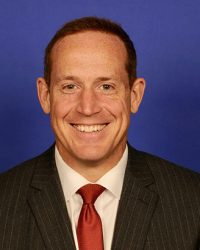
Ted Budd
Score
Complete Vote History
ObamaCare Subsidy Extension Senate
S 3385 ObamaCare Subsidy Extension (Cloture Rejected 51 to 48 on 12/11/2025, Roll Call 644). Extends enhanced ObamaCare subsidies by an additional three years. See U.S. Const., Art. I, Sec. 8.
Venezuela Senate
S J Res 90 Venezuela (Rejected 49 to 51 on 11/6/2025, Roll Call 608). Prevents military action within or against Venezuela without a congressional declaration of war. See U.S. Const., Art. I, Sec. 8.
S J Res 80 Alaska Petroleum Reserve Rule (Passed 52 to 45 on 10/30/2025, Roll Call 599). Overturns a 2022 Bureau of Land Management rule for the 23-million-acre National Petroleum Reserve in Alaska. See U.S. Const., Art. I, Sec. 8 & Art. IV, Sec. 3.
S J Res 80 Alaska Petroleum Reserve Rule (Passed 52 to 45 on 10/30/2025, Roll Call 599). Overturns a 2022 Bureau of Land Management rule for the 23-million-acre National Petroleum Reserve in Alaska. See U.S. Const., Art. I, Sec. 8 & Art. IV, Sec. 3.
Senator Rand Paul’s (R-Ky.) amendment to S 2296 Federal Reserve Interest Payments (Rejected 14 to 83 on 10/9/2025, Roll Call 562). Prohibits any Federal Reserve bank from paying interest on reserve balances that are maintained at a Federal Reserve bank by or on behalf of a big bank or another depository institution. See U.S. Const., Art. I, Sec. 8.
Senator Rand Paul’s (R-Ky.) amendment to S 2296 Federal Reserve Interest Payments (Rejected 14 to 83 on 10/9/2025, Roll Call 562). Prohibits any Federal Reserve bank from paying interest on reserve balances that are maintained at a Federal Reserve bank by or on behalf of a big bank or another depository institution. See U.S. Const., Art. I, Sec. 8.
Budget Resolution Senate
S Con Res 22 Budget Resolution (Rejected 36 to 62 on 9/16/2025, Roll Call 521). Cuts six percent of all federal spending. See U.S. Const., Art. I, Sec. 8.
Reducing Agriculture Funding Senate
Senator John Kennedy’s (R-La.) amendment to HR 3944 Reducing Agriculture Funding (Rejected 14 to 81 on 8/1/2025, Roll Call 476). Reduces discretionary spending in the agriculture appropriations component of the bill by two percent across the board. See U.S. Const., Art. I, Sec. 8.
Senator John Kennedy’s (R-La.) amendment to HR 3944 Reducing Agriculture Funding (Rejected 14 to 81 on 8/1/2025, Roll Call 476). Reduces discretionary spending in the agriculture appropriations component of the bill by two percent across the board. See U.S. Const., Art. I, Sec. 8.
Fiscal 2025 Rescissions Senate
HR 4 Fiscal 2025 Rescissions (Passed 51 to 48 on 7/17/2025, Roll Call 411). Rescinds $9 billion in funding previously appropriated by Congress for fiscal 2025. See U.S. Const., Art. I, Sec. 8.
Ending “Green” Subsidies Senate
Senator Mike Lee's (R-Utah) amendment to HR 1 Ending "Green" Subsidies (Rejected 21 to 79 on 7/1/2025, Roll Call 360). Ends federal tax credits for projects utilizing battery and energy-storage technologies. See U.S. Const., Art. I, Sec. 8.
GENIUS Act Senate
S 1582 GENIUS Act (Passed 68 to 30 on 6/17/2025, Roll Call 318). Imposes new federal regulations on cryptocurrency stablecoins. See U.S. Const., Art. I, Sec. 8.
H J Res 42 Appliance Efficiency Regulations (Passed 52 to 46 on 4/30/2025, Roll Call 223). Overturns a Department of Energy rule imposing new efficiency-standard certification, labeling, and enforcement requirements for dozens of appliances. See U.S. Const., Art. I, Sec. 8.
H J Res 42 Appliance Efficiency Regulations (Passed 52 to 46 on 4/30/2025, Roll Call 223). Overturns a Department of Energy rule imposing new efficiency-standard certification, labeling, and enforcement requirements for dozens of appliances. See U.S. Const., Art. I, Sec. 8.
Water-heater Rule Senate
The federal government should not impose regulatory standards on consumer products. Article I, Section 8 of the Constitution does not authorize Congress to regulate consumer products; this is reserved to the states, as the 10th Amendment affirms.
Minimum-wage Increase Senate
The “Fair Labor Standards Act of 1938,” which mandates a federal minimum wage for nearly every employee in the United States, is unconstitutional. Nothing in the Constitution authorizes Congress to set the wages of non-federal or private employees. In fact, Article I, Section 8, Clause 3 of the Constitution limits Congress to regulating “Commerce … among the several States,” preventing interference by the federal government in intrastate economic matters. The 10th Amendment reinforces that all powers not delegated to the federal government are reserved “to the States respectively, or to the people.”
The “Fair Labor Standards Act of 1938,” which mandates a federal minimum wage for nearly every employee in the United States, is unconstitutional. Nothing in the Constitution authorizes Congress to set the wages of non-federal or private employees. In fact, Article I, Section 8, Clause 3 of the Constitution limits Congress to regulating “Commerce … among the several States,” preventing interference by the federal government in intrastate economic matters. The 10th Amendment reinforces that all powers not delegated to the federal government are reserved “to the States respectively, or to the people.”
Debt Ceiling Senate
Sen. Paul's amendment to HR 1968 Debt Ceiling (Rejected 5 to 94 on 4/4/2025, Roll Call 179). Reduces the bill's increase in the debt limit from $4 trillion to $500 billion.
USAID Funding Cuts Senate
Sen. Paul's amendment to HR 1968 USAID Funding Cuts (Rejected 27 to 73 on 2/21/2025, Roll Call 77). Reduces funding levels for the U.S. Agency for International Development (USAID). See U.S. Const., Art. I, Sec. 8.
Protecting Women’s Sports Senate
The federal government should not use taxpayer money to facilitate biological males competing against real women and girls.
EPA Emissions Rule Senate
H J Res 35 EPA Emissions Rule (Passed 52 to 47 on 2/27/2025, Roll Call 97). Overturns an EPA rule that imposed annual fees on oil and gas facilities that emit methane above certain thresholds. See U.S. Const., Art. I, Sec. 8.
Deficit Reduction Senate
Senator Rand Paul's (R-Ky.) amendment to S Con Res 7 Deficit Reduction (Rejected 24 to 76 on 2/21/2025, Roll Call 77). Reduces the deficit by approximately $1.4 trillion through fiscal 2034. See U.S. Const., Art. I, Sec. 8.
Senator Ben Ray Luján's (D-N.M.) amendment to S Con Res 7 Federal Funding for Law Enforcement (Rejected 48 to 52 on 2/21/2025, Roll Call 81). Increases federal funding for local law enforcement by funding the COPS Hiring Program. See U.S. Const., Art. I, Sec. 8.
Senator Ben Ray Luján's (D-N.M.) amendment to S Con Res 7 Federal Funding for Law Enforcement (Rejected 48 to 52 on 2/21/2025, Roll Call 81). Increases federal funding for local law enforcement by funding the COPS Hiring Program. See U.S. Const., Art. I, Sec. 8.
In Vitro Fertilization Senate
Senator Tammy Duckworth's (D-Ill.) amendment to S Con Res 7 In Vitro Fertilization (Rejected 49 to 51 on 2/21/2025, Roll Call 82). Protects access to "reproductive healthcare," including "fertility treatment services" such as in vitro fertilization (IVF). See U.S. Const., Art. I, Sec. 8.
Senator Tammy Duckworth's (D-Ill.) amendment to S Con Res 7 In Vitro Fertilization (Rejected 49 to 51 on 2/21/2025, Roll Call 82). Protects access to "reproductive healthcare," including "fertility treatment services" such as in vitro fertilization (IVF). See U.S. Const., Art. I, Sec. 8.
The U.S. Constitution does not grant a right to abortion. Abortion is not healthcare, it is the ending of innocent human life, and the Declaration of Independence affirms the right to life as a fundamental, God-given, and inherent right.
Continuing Appropriations Senate
HR 10545 Continuing Appropriations (Passed 85 to 11 on 12/21/2024, Roll Call 339). Extends federal funding through March 14, 2025. See U.S. Const., Art. I, Sec. 8.
Canceling Ukrainian Debt Senate
S J Res 117 Canceling Ukrainian Debt (Rejected 37 to 61 on 11/20/2024, Roll Call 295). Disapproves of President Biden's plan to cancel $4.65 billion in Ukrainian debt.
In Vitro Fertilization Senate
IVF is not included in the powers delegated to the federal government by the Constitution. Moreover, in February 2024, the Alabama Supreme Court ruled that frozen embryos should be considered children, just as should be the case with embryos in the mother’s womb. The destruction of frozen embryos — which is common in the IVF process — is the destruction of innocent human life.
IVF is not included in the powers delegated to the federal government by the Constitution. Moreover, in February 2024, the Alabama Supreme Court ruled that frozen embryos should be considered children, just as should be the case with embryos in the mother’s womb. The destruction of frozen embryos — which is common in the IVF process — is the destruction of innocent human life.
Consumer Furnaces Rule Senate
The Constitution does not authorize the federal government to regulate furnaces and other appliances.
This vote marked the return of the United States to the Paris-based organization, reversing its formal exit by the Trump administration in 2018. Yet rather than merely leaving UNESCO, the United States should fully withdraw from the entire United Nations system. The UN poses one of the greatest threats to U.S. sovereignty and the God-given rights of the American people, as its charter is antithetical to the U.S. Constitution. Congress must pursue a sound, traditional foreign policy of noninterventionism, based on U.S. interests and the original intent of the Founding Fathers.
This vote marked the return of the United States to the Paris-based organization, reversing its formal exit by the Trump administration in 2018. Yet rather than merely leaving UNESCO, the United States should fully withdraw from the entire United Nations system. The UN poses one of the greatest threats to U.S. sovereignty and the God-given rights of the American people, as its charter is antithetical to the U.S. Constitution. Congress must pursue a sound, traditional foreign policy of noninterventionism, based on U.S. interests and the original intent of the Founding Fathers.
Foreign Aid Package Senate
HR 815 Foreign Aid Package (Passed 79 to 18 on 4/23/2024, Roll Call 154). Provides a total of $95.3 billion in “emergency” aid for Ukraine, Israel, and Taiwan. See U.S. Const., Art. I, Sec. 8.
FISA Reauthorization Senate
FISA has been used to spy on U.S. citizens without a warrant in violation of the Fourth Amendment. While the bill includes provisions ostensibly to protect the privacy of U.S. citizens, those provisions fail to uphold Americans’ Fourth Amendment-protected rights. Furthermore, the FISA Court approves just about any surveillance request that comes its way, and given the track record of intelligence agencies, it is unlikely that they would actually follow these rules.
FISA has been used to spy on U.S. citizens without a warrant in violation of the Fourth Amendment. While the bill includes provisions ostensibly to protect the privacy of U.S. citizens, those provisions fail to uphold Americans’ Fourth Amendment-protected rights. Furthermore, the FISA Court approves just about any surveillance request that comes its way, and given the track record of intelligence agencies, it is unlikely that they would actually follow these rules.
Surveilling U.S. Citizens Senate
Sen. Rand Paul's (R-Ky.) amendment to HR 7888 Surveilling U.S. Citizens (Rejected 11 to 81 on 4/19/2024, Roll Call 147). Prohibits federal officials from requesting orders under FISA to surveil U.S. persons, among other provisions. See U.S. Const., amend. 4.
Sen. Rand Paul's (R-Ky.) amendment to HR 7888 Surveilling U.S. Citizens (Rejected 11 to 81 on 4/19/2024, Roll Call 147). Prohibits federal officials from requesting orders under FISA to surveil U.S. persons, among other provisions. See U.S. Const., amend. 4.
EPA Tailpipe Emissions Rule Senate
S 4072 EPA Tailpipe Emissions Rule (Rejected 52 to 46 on 4/18/2024, Roll Call 142). Prohibits the use of fiscal 2024 funding to implement or enforce EPA rules on tailpipe emissions for vehicles. See U.S. Const., Art. I, Sec. 8.
Greenhouse Gas Emissions Senate
The 10th Amendment reserves any such regulatory powers to “the States respectively, or to the people,” as opposed to unelected federal bureaucrats. In addition to eroding state sovereignty, the FHWA’s rule is a step toward implementing UN-led global “climate change” policy.
The 10th Amendment reserves any such regulatory powers to “the States respectively, or to the people,” as opposed to unelected federal bureaucrats. In addition to eroding state sovereignty, the FHWA’s rule is a step toward implementing UN-led global “climate change” policy.
Free Speech Senate
Sen. Eric Schmitt's (R-Mo.) amendment to HR 2882 Free Speech (Rejected 47 to 51 on 3/23/2024, Roll Call 109). Prohibits funds from being used by the federal government to label speech as “disinformation or misinformation” or to coerce online platforms to censor such speech. See U.S. Const., amend. 1.
Sen. Eric Schmitt's (R-Mo.) amendment to HR 2882 Free Speech (Rejected 47 to 51 on 3/23/2024, Roll Call 109). Prohibits funds from being used by the federal government to label speech as “disinformation or misinformation” or to coerce online platforms to censor such speech. See U.S. Const., amend. 1.
Consolidated Appropriations Senate
HR 2882 Consolidated Appropriations (Passed 74 to 24 on 3/23/2024, Roll Call 114). Appropriates $1.2 trillion in total funding for fiscal 2024. See U.S. Const., Art. I, Sec. 8.
Spending Reductions Senate
Sen. Paul's amendment to HR 2882 Spending Reductions (Rejected 34 to 63 on 3/23/2024, Roll Call 106). Reduces spending by 5 percent, excluding military and border funding. See U.S. Const., Art. I, Sec. 8.
Migrant Parole Program Senate
Sen. Bill Hagerty's (R-Tenn.) amendment to HR 2882 Migrant Parole Program (Rejected 47 to 51 on 3/23/2024, Roll Call 112). Prohibits funding in the bill from being used to fly illegal migrants into the United States. See U.S. Const., Art. I, Sec. 8.
CBP One App Senate
Migrants who do not satisfy the conditions for asylum are often, upon their entry into the United States and release from custody, granted parole for up to two years under Title 8 of the Immigration and Nationality Act, making them eligible for work permits. Given that aliens are presumed to be ineligible for asylum if they enter the United States unlawfully after failing to seek refuge in a third country (e.g., Mexico), the CBP One app has effectively become a fraudulent gateway for millions of illegal migrants. Article I, Section 8 of the Constitution stipulates that Congress shall have the power to “establish a uniform Rule of Naturalization,” and Article II, Section 3 requires the president to “take Care that the Laws be faithfully executed.”
Migrants who do not satisfy the conditions for asylum are often, upon their entry into the United States and release from custody, granted parole for up to two years under Title 8 of the Immigration and Nationality Act, making them eligible for work permits. Given that aliens are presumed to be ineligible for asylum if they enter the United States unlawfully after failing to seek refuge in a third country (e.g., Mexico), the CBP One app has effectively become a fraudulent gateway for millions of illegal migrants. Article I, Section 8 of the Constitution stipulates that Congress shall have the power to “establish a uniform Rule of Naturalization,” and Article II, Section 3 requires the president to “take Care that the Laws be faithfully executed.”
The purpose of the U.S. Census is to determine the allotment of congressional seats and Electoral College votes for each state. Illegal aliens, who are not U.S. citizens, should not be counted toward determining those numbers. Furthermore, changing the demographics of a congressional district or state also changes the voting patterns of those areas.
The purpose of the U.S. Census is to determine the allotment of congressional seats and Electoral College votes for each state. Illegal aliens, who are not U.S. citizens, should not be counted toward determining those numbers. Furthermore, changing the demographics of a congressional district or state also changes the voting patterns of those areas.
Consolidated Appropriations Senate
HR 4366 Consolidated Appropriations (Passed 75 to 22 on 3/8/2024, Roll Call 84). Appropriates $467.5 billion in federal funding for fiscal 2024. See U.S. Const., Art. I, Sec. 8.
Federal Reserve Activities Senate
Senator Rand Paul's (R-Ky.) amendment to HR 7463 Federal Reserve Activities (Rejected 37 to 53 on 2/29/2024, Roll Call 63). Prohibits the Federal Reserve from purchasing or selling the debt of any state or municipality. See U.S. Const., Art. I, Sec. 8 and Art. I, Sec. 10.
Senator Rand Paul's (R-Ky.) amendment to HR 7463 Federal Reserve Activities (Rejected 37 to 53 on 2/29/2024, Roll Call 63). Prohibits the Federal Reserve from purchasing or selling the debt of any state or municipality. See U.S. Const., Art. I, Sec. 8 and Art. I, Sec. 10.
U.S. Military in Syria Senate
Under the U.S. Constitution, the power to declare war belongs to Congress, and the United States should follow a policy of noninterventionism, minding its own business in foreign affairs.
Student Loan Repayment Rule Senate
S J Res 43 Student Loan Repayment Rule (Rejected 49 to 50 on 11/15/2023, Roll Call 310). Formally disapproves of an unconstitutional Department of Education rule to repay and forgive student loans. See U.S. Const., Art. I, Sec. 8.
Spending Reductions Senate
Sen. Paul's (R-Ky.) amendment to HR 6363 Spending Reductions (Rejected 32 to 65 on 11/15/2023, Roll Call 311). Reduces funding in the bill for most federal agencies by 15 percent, and rescinds $30 billion in IRS enforcement funds. See U.S. Const., Art. I, Sec. 8.
Sen. Paul's (R-Ky.) amendment to HR 6363 Spending Reductions (Rejected 32 to 65 on 11/15/2023, Roll Call 311). Reduces funding in the bill for most federal agencies by 15 percent, and rescinds $30 billion in IRS enforcement funds. See U.S. Const., Art. I, Sec. 8.
HR 4366 Consolidated Appropriations Minibus (Passed 82 to 15 on 11/1/2023, Roll Call 284). Provides roughly $279 billion in spending for three of the 12 fiscal 2024 appropriations bills. See U.S. Const., Art. I, Sec. 8.
Audit the Fed Senate
Sen. Rand Paul's (R-Ky.) amendment to HR 4366 Audit the Fed (Rejected 46 to 51 on 11/1/2023, Roll Call 280). Requires a full audit of the Federal Reserve System.
U.S. Military in Niger Senate
The deployment of U.S. forces to Niger was not specifically authorized by Congress, and under the Constitution only Congress has the power to declare war.
Mask Mandates Senate
The federal government has no authority under the Constitution to impose mask mandates.
Continuing Resolution Senate
HR 5860 Continuing Resolution (Passed 88 to 9 on 9/30/2023, Roll Call 247). Appropriates federal funding at bloated fiscal 2023 levels. See U.S. Const., Art. I, Sec. 8.
Declaration of War Senate
Sen. Rand Paul's (R-Ky.) amendment to S 2226 Declaration of War (Rejected 16 to 83 on 7/19/2023, Roll Call 191). Recognizes that the North Atlantic Treaty “does not supersede the constitutional requirement that Congress declare war.” See U.S. Const., Art. I, Sec. 8.
Sen. Rand Paul's (R-Ky.) amendment to S 2226 Declaration of War (Rejected 16 to 83 on 7/19/2023, Roll Call 191). Recognizes that the North Atlantic Treaty “does not supersede the constitutional requirement that Congress declare war.” See U.S. Const., Art. I, Sec. 8.
ATF Firearm Brace Rule Senate
H J Res 44 ATF Firearm Brace Rule (Rejected 49 to 50 on 6/22/2023, Roll Call 171). Formally disapproves of an unconstitutional ATF rule expanding the definition of a “short-barreled rifle.” See U.S. Const., amend. 2.
The federal government has no authority under the Constitution to implement environmental regulations. Furthermore, the EPA’s rule feeds right into the climate-change hoax and, by extension, the UN’s Agenda 2030, and would impose onerous regulations on businesses.
The federal government has no authority under the Constitution to implement environmental regulations. Furthermore, the EPA’s rule feeds right into the climate-change hoax and, by extension, the UN’s Agenda 2030, and would impose onerous regulations on businesses.
Spending Reductions Senate
Sen. Paul's (R-Ky.) amendment to HR 3746 Spending Reductions (Rejected 21 to 75 on 6/1/2023, Roll Call 136). Decreases federal spending from $4.8 to $3.9 trillion over four years. See U.S. Const., Art. I, Sec. 8.
Bipartisan Debt-limit Deal Senate
HR 3746 Bipartisan Debt-limit Deal (Passed 63 to 36 on 6/1/2023, Roll Call 146). Suspends the debt limit through January 1, 2025 and create caps on “discretionary” spending for fiscal years 2024 and 2025, among many other dubious changes. See U.S. Const., Art. I, Sec. 8.
HR 3746 Bipartisan Debt-limit Deal (Passed 63 to 36 on 6/1/2023, Roll Call 146). Suspends the debt limit through January 1, 2025 and create caps on “discretionary” spending for fiscal years 2024 and 2025, among many other dubious changes. See U.S. Const., Art. I, Sec. 8.
Equal Rights Amendment Senate
The claim that the ERA is a “valid … part of the Constitution” is a sham. When Congress submitted the ERA to the states for ratification in 1972, it set a seven-year ratification period that ended on March 22, 1979. During that period, 35 states ratified the ERA, but four of those states reconsidered and rescinded their ratifications. This left the ERA seven states short of the three-fourths majority (38 states) needed to become part of the Constitution. Prior to the deadline, when it became apparent the 38-state threshold would not be reached, Congress extended the deadline to June 30, 1982. This legally dubious extension caused a fifth state to rescind, and during the extension period no new states ratified. In recent years, three new states have ratified the ERA. But to claim that this makes the ERA part of the Constitution is to ignore the long-expired deadlines, as well as the five states that rescinded.
The claim that the ERA is a “valid … part of the Constitution” is a sham. When Congress submitted the ERA to the states for ratification in 1972, it set a seven-year ratification period that ended on March 22, 1979. During that period, 35 states ratified the ERA, but four of those states reconsidered and rescinded their ratifications. This left the ERA seven states short of the three-fourths majority (38 states) needed to become part of the Constitution. Prior to the deadline, when it became apparent the 38-state threshold would not be reached, Congress extended the deadline to June 30, 1982. This legally dubious extension caused a fifth state to rescind, and during the extension period no new states ratified. In recent years, three new states have ratified the ERA. But to claim that this makes the ERA part of the Constitution is to ignore the long-expired deadlines, as well as the five states that rescinded.
Federal Firefighter Grants Senate
S 870 Federal Firefighter Grants (Passed 95 to 2 on 4/20/2023, Roll Call 94). Unconstitutionally authorizes $95 million annually through fiscal 2030 for the USFA, increasing funding levels by 24 percent. See U.S. Const., Art. I, Sec. 8.
Abortion Senate
S J Res 10 Abortion (Rejected 48 to 51 on 4/19/2023, Roll Call 90). Overturns the Department of Veterans Affairs rule allowing medical coverage for abortion counseling and procedures. See U.S. Const., amends. 5 & 14.
Federal Water Rule Senate
Both federal water regulations and the EPA are unconstitutional, and if the latest Biden administration rule were allowed to stand, activities such as farming and real estate development would be greatly hampered, since farmers and developers would be subject to increased unconstitutional permit requirements and fines concerning their treatment of almost any body of water, no matter how small.
Both federal water regulations and the EPA are unconstitutional, and if the latest Biden administration rule were allowed to stand, activities such as farming and real estate development would be greatly hampered, since farmers and developers would be subject to increased unconstitutional permit requirements and fines concerning their treatment of almost any body of water, no matter how small.
It is unconstitutional to suspend the Constitution by declaring national public-health emergencies.
WHO Pandemic Treaty Senate
In recent decades both the Executive Branch and Congress have regularly skirted the constitutional requirement in Article II, Section 2 of the U.S. Constitution that treaties have to be made with the “Advice and Consent of the Senate … provided two thirds of the Senators present concur.” Instead of recognizing agreements as treaties, they unconstitutionally designate them as “executive agreements,” thereby enabling the president and Congress to avoid seeking the advice and consent of the Senate and pass them by a simple majority of the House and Senate, rather than the more rigorous threshold of two-thirds of the senators present.
In recent decades both the Executive Branch and Congress have regularly skirted the constitutional requirement in Article II, Section 2 of the U.S. Constitution that treaties have to be made with the “Advice and Consent of the Senate … provided two thirds of the Senators present concur.” Instead of recognizing agreements as treaties, they unconstitutionally designate them as “executive agreements,” thereby enabling the president and Congress to avoid seeking the advice and consent of the Senate and pass them by a simple majority of the House and Senate, rather than the more rigorous threshold of two-thirds of the senators present.
2001 AUMF Repeal Senate
Senator Rand Paul's (R-Ky.) amendment to S 316 2001 AUMF Repeal (Rejected 9 to 86 on 3/22/2023, Roll Call 65). Repeals the unconstitutional 2001 Authorization for Use of Military Force. See U.S. Const., Art. I, Sec. 8.
ESG Fiduciary Rule Senate
H J Res 30 ESG Fiduciary Rule (Passed 50 to 46 on 3/1/2023, Roll Call 35). Overturns the Labor Department's rule allowing retirement-plan fiduciaries to use ESG. See U.S. Const., Art. I, Sec. 8.
Omnibus 2023 Spending House
HR 2617 Omnibus 2023 Spending (Passed 225 to 201 on 12/23/2022, Roll Call 549). Spends $1.7 trillion on multiple unconstitutional programs and agencies. See U.S. Const., Art. I, Sec. 8.
Marriage House
HR 8404 Marriage (Passed 258 to 169 on 12/8/2022, Roll Call 513). Repeals the Defense of Marriage Act and codifies the "right" to marry regardless of sexual orientation.
Federal Police Grants House
HR 6448 Federal Police Grants (Passed 360 to 64 on 9/22/2022, Roll Call 451). Spends a total of $300 million over five years on unconstitutional grants to local police, threatening their independence. See U.S. Const., Art. I, Sec. 8.
This bill undermines election integrity, infringes upon state sovereignty, and makes changes that are inconsistent with Article II, Section 1 of the U.S. Constitution.
Inflation Reduction Act House
HR 5376 Inflation Reduction Act (Passed 220 to 207 on 8/12/2022, Roll Call 420). Spends at least $512 billion on multiple unconstitutional and left-wing programs and initiatives. See U.S. Const., Art. I, Sec. 8.
Assault Weapons Ban House
This bill is a gross violation of the U.S. Constitution, especially the Second Amendment, which recognizes that “the right of the people to keep and bear Arms, shall not be infringed.” This is one step closer to a disarmed America — with the assistance of taxpayer dollars.
This bill is a gross violation of the U.S. Constitution, especially the Second Amendment, which recognizes that “the right of the people to keep and bear Arms, shall not be infringed.” This is one step closer to a disarmed America — with the assistance of taxpayer dollars.
Semiconductor Incentives House
HR 4346 Semiconductor Incentives (Passed 243 to 187 on 7/28/2022, Roll Call 404). Spends $54.2 billion on multiple unconstitutional research, development, and manufacturing programs, and authorizes an additional $168.7 billion in spending. See U.S. Const., Art. I, Sec. 8.
HR 4346 Semiconductor Incentives (Passed 243 to 187 on 7/28/2022, Roll Call 404). Spends $54.2 billion on multiple unconstitutional research, development, and manufacturing programs, and authorizes an additional $168.7 billion in spending. See U.S. Const., Art. I, Sec. 8.
Expanding NATO House
HR 1130 Expanding NATO (Passed 394 to 18 on 7/18/2022, Roll Call 364). Expresses support for Sweden and Finland joining NATO and calls on NATO member states to formally support the countries' accession.
Abortion Access House
The right to life is the most fundamental, God-given, and unalienable right asserted in the Declaration of Independence and guaranteed by the Fifth and 14th Amendments to the U.S. Constitution.
U.S. Military in Syria House
According to the U.S. Constitution, only Congress has the authority to declare war. It is long past time to bring the troops home from Syria, especially considering that Congress never issued a declaration of war in relation to the country.
Gun Control House
S 2938 Gun Control (Passed 234 to 193 on 6/24/2022, Roll Call 299). Implements new federal gun controls and mental-health programs. See U.S. Const., amend. 2.
Ukraine Aid House
HR 7691 Ukraine Aid (Passed 368 to 57 on 4/7/2022, Roll Call 145). Unconstitutionally spends $40.1 billion in aid to Ukraine. See U.S. Const., Art. I, Sec. 8.
Covid Aid House
HR 3807 Covid Aid (Passed 223 to 203 on 4/7/2022, Roll Call 123). Unconstitutionally spends $55 billion in grants to small businesses harmed by government Covid restrictions. See U.S. Const., Art. I, Sec. 8.
Peter Navarro House
Honoring the subpoenas would undermine the constitutional separation of powers between the executive and legislative branches of government. President Trump had invoked executive privilege, and as Navarro pointed out, “it is not my privilege to waive” it. The January 6 committee is not a court of law; it is a kangaroo court. In fact, it was rigged from the beginning, when Speaker of the House Nancy Pelosi (D-Calif.) took the unprecedented action of nixing two of Minority Leader Kevin McCarthy’s (R-Calif.) choices for the committee — Representatives Jim Banks (R-Ind.) and Jim Jordan (R-Ohio). Pelosi instead put on the so-called bipartisan committee RINOs (Republicans In Name Only) Liz Cheney (Wy.) and Adam Kinzinger (Ill.).
Honoring the subpoenas would undermine the constitutional separation of powers between the executive and legislative branches of government. President Trump had invoked executive privilege, and as Navarro pointed out, “it is not my privilege to waive” it. The January 6 committee is not a court of law; it is a kangaroo court. In fact, it was rigged from the beginning, when Speaker of the House Nancy Pelosi (D-Calif.) took the unprecedented action of nixing two of Minority Leader Kevin McCarthy’s (R-Calif.) choices for the committee — Representatives Jim Banks (R-Ind.) and Jim Jordan (R-Ohio). Pelosi instead put on the so-called bipartisan committee RINOs (Republicans In Name Only) Liz Cheney (Wy.) and Adam Kinzinger (Ill.).
NATO House
The United States should stay clear of entangling alliances such as NATO, but also because NATO obligates the United States to go to war if any member of NATO is attacked. Specifically, under the North Atlantic Treaty that established NATO in 1949, member nations “agree that an armed attack against one or more of them … shall be considered an attack against them all.” This agreement undermines the provision in the U.S. Constitution that assigns to Congress the power to declare war. There are now 30 countries in NATO, and an attack on any one of them could pull the United States into a war that neither Congress nor the American people want.
The United States should stay clear of entangling alliances such as NATO, but also because NATO obligates the United States to go to war if any member of NATO is attacked. Specifically, under the North Atlantic Treaty that established NATO in 1949, member nations “agree that an armed attack against one or more of them … shall be considered an attack against them all.” This agreement undermines the provision in the U.S. Constitution that assigns to Congress the power to declare war. There are now 30 countries in NATO, and an attack on any one of them could pull the United States into a war that neither Congress nor the American people want.
Omnibus Appropriations House
HR 2471 Omnibus Appropriations (Passed 361 to 69 on 3/9/2022, Roll Call 65). Spends $927.4 billion on multiple unconstitutional programs and agencies. See U.S. Const., Art. I, Sec. 8.
Omnibus Appropriations House
HR 2471 Omnibus Appropriations (Passed 260 to 171 on 3/9/2022, Roll Call 66). Spends about $600 billion on multiple unconstitutional programs and agencies. See U.S. Const., Art. I, Sec. 8.
Competitiveness Package House
HR 4521 Competitiveness Package (Passed 222 to 210 on 2/4/2022, Roll Call 31). Unconstitutionally authorizes $350 billion over five years for federal funding of research and development programs, along with leftist-agenda items. See U.S. Const., Art. I, Sec. 8.
HR 4521 Competitiveness Package (Passed 222 to 210 on 2/4/2022, Roll Call 31). Unconstitutionally authorizes $350 billion over five years for federal funding of research and development programs, along with leftist-agenda items. See U.S. Const., Art. I, Sec. 8.
The UNFCCC infringes on U.S. sovereignty and places an undue burden on American industry, workers, and taxpayers. Meeting the emission goals of the UNFCCC would significantly reduce U.S. economic output. Furthermore, the treaty requires the United States and other industrialized nations to provide economic assistance to fund climate-change action in “developing nations,” such as China.
The UNFCCC infringes on U.S. sovereignty and places an undue burden on American industry, workers, and taxpayers. Meeting the emission goals of the UNFCCC would significantly reduce U.S. economic output. Furthermore, the treaty requires the United States and other industrialized nations to provide economic assistance to fund climate-change action in “developing nations,” such as China.
Federalizing Voting House
Not only does this bill undermine election integrity, but it infringes upon federalism and state sovereignty as established under the Constitution and its 10th Amendment.
Build Back Better House
HR 5376 Build Back Better Act (Passed 220 to 213 on 11/19/2021). Spends $1.75 trillion on a wide range of left-wing, Great-Reset programs. See U.S. Const., Art. I, Sec. 8.
Infrastructure House
HR 3684 Infrastructure (Passed 228 to 206 on 11/5/2021). Spends $1.2 trillion on wasteful projects and socialized programs. See U.S. Const., Art. I, Sec. 8.
Abortion House
Abortion has nothing to do with the protection of women’s health, despite the name of the bill; and there is no right to an abortion in the Constitution, the 1973 Roe v. Wade decision notwithstanding.
Voting Rights House
Not only does this bill undermine election integrity, but it infringes upon state sovereignty as established under the 10th Amendment, subjugating it to the whims of federal bureaucrats.
HR 4373 State-Foreign Operations Appropriations Bill (Passed 217 to 212 on 7/28/2021). Spends $62.2 billion on the State Department and other foreign-affairs matters. Loaded with foreign aid and climate-change provisions. See U.S. Const., Art. I, Sec. 8.
HR 4373 State-Foreign Operations Appropriations Bill (Passed 217 to 212 on 7/28/2021). Spends $62.2 billion on the State Department and other foreign-affairs matters. Loaded with foreign aid and climate-change provisions. See U.S. Const., Art. I, Sec. 8.
January 6 Committee House
Former White House Chief of Staff Mark Meadows' lawsuit, which describes the committee’s actions as “unconstitutional,” rightfully points out, “To the extent Congress seeks to utilize subpoenas to investigate and punish perceived criminal wrongdoing, it unconstitutionally intrudes on the prerogatives of the Executive Branch.” Furthermore, the January 6 Committee is part of a growing trend toward tyranny and political persecution.
Former White House Chief of Staff Mark Meadows' lawsuit, which describes the committee’s actions as “unconstitutional,” rightfully points out, “To the extent Congress seeks to utilize subpoenas to investigate and punish perceived criminal wrongdoing, it unconstitutionally intrudes on the prerogatives of the Executive Branch.” Furthermore, the January 6 Committee is part of a growing trend toward tyranny and political persecution.
HR 567 North and West Africa Interventionism (Passed 395 to 15 on 6/29/2021). Establishes a counterterrorism program in North and West Africa, dragging the U.S. into an unconstitutional, entangling alliance. See U.S. Const., Art. I, Sec. 8.
HR 2225 National Science Foundation (Passed 345 to 67 on 6/28/2021). Authorizes $77.9 billion for federal funding of science and engineering research and development. Promotes a radical climate-change agenda. See U.S. Const., Art. I, Sec. 8.
HR 391 Global Health Security Strategy (Passed 307 to 112 on 6/28/2021). Requires the president to take actions promoting U.S. integration in globalist, UN-tied health programs. See U.S. Const., Art. I, Sec. 8.
Iraq AUMF Repeal House
HR 256 Iraq AUMF Repeal (Passed 268 to 161 on 6/17/2021). Repeals the 2002 Authorization for Use of Military Force Against Iraq, which unconstitutionally abdicated Congress's war powers. See U.S. Const., Art. I, Sec. 8, Cl. 11.
The United States already observes 10 other federal holidays. Furthermore, seeing as slavery ended on December 6, not June 19, the inclusion of the words “National Independence Day” to Juneteenth creates the appearance of supplanting July 4 as America’s Independence Day. This perpetuates a false and dangerous notion that the United States has different days of independence depending on one’s race or ancestry, and is consistent with the communist tactic of “dividing the people” along racial lines.
The United States already observes 10 other federal holidays. Furthermore, seeing as slavery ended on December 6, not June 19, the inclusion of the words “National Independence Day” to Juneteenth creates the appearance of supplanting July 4 as America’s Independence Day. This perpetuates a false and dangerous notion that the United States has different days of independence depending on one’s race or ancestry, and is consistent with the communist tactic of “dividing the people” along racial lines.
H.R. 51 Washington, D.C., Statehood (Passed 216 to 208 on April 22, 2021, Roll Call 132). Would admit most of the District of Columbia as the 51st state and give it full representation in Congress, with two U.S. senators and one U.S. representative.
HR 1603 Agricultural Migrant Amnesty (Passed 247 to 174 on 3/18/2021). Gives amnesty to over 1.5 million illegal aliens in the agriculture industry and changes the H-2A visa program to make it more attractive to migrants and increase chain migration.
HR 1603 Agricultural Migrant Amnesty (Passed 247 to 174 on 3/18/2021). Gives amnesty to over 1.5 million illegal aliens in the agriculture industry and changes the H-2A visa program to make it more attractive to migrants and increase chain migration.
Background Checks House
H.R. 8 Background Checks (Passed 227 to 203 on March 11, 2021, Roll Call 75). Would criminalize most private firearms transactions unless they include an FBI background check, representing a major infringement on our God-given right to keep and bear arms.
H.R. 8 Background Checks (Passed 227 to 203 on March 11, 2021, Roll Call 75). Would criminalize most private firearms transactions unless they include an FBI background check, representing a major infringement on our God-given right to keep and bear arms.
HR 1319 Coronavirus Appropriations (Passed 220 to 211 on 3/10/2021). Spends $1.9 trillion on unconstitutional programs in the name of coronavirus relief. See U.S. Const., Art. I, Sec. 8.
Collective Bargaining House
HR 842 Collective Bargaining (Passed 225 to 206 on 3/9/2021). Ends state right-to-work laws, empowers the feds to force employees to unionize against their will, encourages illegal aliens to join unions, and aligns U.S. labor laws with the USMCA's requirements. See U.S. Const., amend. 10.
HR 842 Collective Bargaining (Passed 225 to 206 on 3/9/2021). Ends state right-to-work laws, empowers the feds to force employees to unionize against their will, encourages illegal aliens to join unions, and aligns U.S. labor laws with the USMCA's requirements. See U.S. Const., amend. 10.
Police Reform House
H.R. 1280 Police Reform (Passed 220 to 212 on March 3, 2021, Roll Call 60). Would establish national standards for police departments, another step toward a federal takeover of local police, and aims to defund police departments in favor of leftist “community organizations.”
H.R. 1280 Police Reform (Passed 220 to 212 on March 3, 2021, Roll Call 60). Would establish national standards for police departments, another step toward a federal takeover of local police, and aims to defund police departments in favor of leftist “community organizations.”
Federalizing Voting House
H.R. 1 Federalizing Voting (Passed 220 to 210 on March 3, 2021, Roll Call 62). Would implement a sweeping federalization of American elections with provisions that would severely damage election integrity, including nationwide Internet, automatic, and same-day voter registration, mail-in voting, and early voting.
H.R. 1 Federalizing Voting (Passed 220 to 210 on March 3, 2021, Roll Call 62). Would implement a sweeping federalization of American elections with provisions that would severely damage election integrity, including nationwide Internet, automatic, and same-day voter registration, mail-in voting, and early voting.
Equality Act House
H.R. 5 Equality Act (Passed 224 to 206 on February 25, 2021, Roll Call 39). Expands definition of protected classes in federal law to include “gender identity.” Males who identify as females would be able to use public restrooms of the opposite sex — and vice versa. Lacks any religious exemptions.
H.R. 5 Equality Act (Passed 224 to 206 on February 25, 2021, Roll Call 39). Expands definition of protected classes in federal law to include “gender identity.” Males who identify as females would be able to use public restrooms of the opposite sex — and vice versa. Lacks any religious exemptions.
Trump Impeachment House
House Resolution 24 Trump Impeachment (Adopted 232 to 197 on January 13, 2021, Roll Call 17). Trump had not committed any crime — much less “high Crimes and Misdemeanors” (the constitutional standard for impeachment).
NDAA (Veto Override) House
We oppose. The act includes spending not only for legitimate national defense, but also for military interventionism in foreign lands that does not make America safer. Also, the legislation undercuts the president’s legitimate authority as commander-in-chief by restricting his ability to withdraw troops from Afghanistan, Germany, and South Korea.
We oppose. The act includes spending not only for legitimate national defense, but also for military interventionism in foreign lands that does not make America safer. Also, the legislation undercuts the president’s legitimate authority as commander-in-chief by restricting his ability to withdraw troops from Afghanistan, Germany, and South Korea.
We oppose. Congress is failing to address its profligate spending that yielded an annual federal deficit of $3.1 trillion in fiscal 2020. Moreover, Congress is minimizing its accountability to voters by combining all “discretionary” federal spending and coronavirus aid into one gigantic bill and only holding two votes on that bill in the House.
We oppose. Congress is failing to address its profligate spending that yielded an annual federal deficit of $3.1 trillion in fiscal 2020. Moreover, Congress is minimizing its accountability to voters by combining all “discretionary” federal spending and coronavirus aid into one gigantic bill and only holding two votes on that bill in the House.
We oppose. Congress is failing to address its fiscally and constitutionally irresponsible budgeting and appropriating process that yielded an annual federal deficit of $3.1 trillion in fiscal 2020. Congress is minimizing its accountability to voters by combining all “discretionary” federal spending and coronavirus aid into one gigantic bill and only holding two votes on that bill in the House. Moreover, most of the coronavirus aid provisions, including direct checks, federal unemployment benefits, and subsidization of the economy, exceed the federal government’s authority.
We oppose. Congress is failing to address its fiscally and constitutionally irresponsible budgeting and appropriating process that yielded an annual federal deficit of $3.1 trillion in fiscal 2020. Congress is minimizing its accountability to voters by combining all “discretionary” federal spending and coronavirus aid into one gigantic bill and only holding two votes on that bill in the House. Moreover, most of the coronavirus aid provisions, including direct checks, federal unemployment benefits, and subsidization of the economy, exceed the federal government’s authority.
Sustainable Energy House
We oppose. The bill advances a radical environmentalist agenda and increases federal government meddling in the energy market. Under the Constitution’s Interstate Commerce Clause, the federal government is empowered “to regulate Commerce … among the several States” only to prevent the restriction of the free flow of goods among the states. Moreover, H.R. 4447 infringes on U.S. sovereignty and will cause energy costs to skyrocket.
We oppose. The bill advances a radical environmentalist agenda and increases federal government meddling in the energy market. Under the Constitution’s Interstate Commerce Clause, the federal government is empowered “to regulate Commerce … among the several States” only to prevent the restriction of the free flow of goods among the states. Moreover, H.R. 4447 infringes on U.S. sovereignty and will cause energy costs to skyrocket.
Pregnant Workers House
We oppose. Nowhere in the Constitution is the federal government authorized to regulate private employers, and federal requirements for covered benefits usually mean decreased pay. This is a matter reserved for the states and the people under the 10th Amendment.
We oppose. Nowhere in the Constitution is the federal government authorized to regulate private employers, and federal requirements for covered benefits usually mean decreased pay. This is a matter reserved for the states and the people under the 10th Amendment.
Public Lands House
We oppose. This bill irresponsibly increases the federal deficit and diverts energy royalties from being spent for needed constitutional purposes. Additionally, the Constitution does not authorize Congress to purchase private property except “for the Erection of Forts, Magazines, Arsenals, dock-Yards, and other needful Buildings.” Moreover, the federal government already owns a huge percentage of land directly —about 28 percent of the nation — and is a demonstrably poor steward of public lands.
We oppose. This bill irresponsibly increases the federal deficit and diverts energy royalties from being spent for needed constitutional purposes. Additionally, the Constitution does not authorize Congress to purchase private property except “for the Erection of Forts, Magazines, Arsenals, dock-Yards, and other needful Buildings.” Moreover, the federal government already owns a huge percentage of land directly —about 28 percent of the nation — and is a demonstrably poor steward of public lands.
We oppose. The statues that fill the National Statuary Hall are sent by the states at their discretion, and Congress should not be assuming the authority to tell the states which statues they are and are not allowed to place in the hall. This is plainly an attempt to erase American history.
We oppose. The statues that fill the National Statuary Hall are sent by the states at their discretion, and Congress should not be assuming the authority to tell the states which statues they are and are not allowed to place in the hall. This is plainly an attempt to erase American history.
We oppose. The federal government should not be funding highways, addressing transportation-related “climate-change” issues, promoting motor-vehicle safety, or imposing a tax on driving in order to pay for highway construction and maintenance. Such projects should be left in the hands of state or municipal governments, where the Constitution intends such issues to be handled.
We oppose. The federal government should not be funding highways, addressing transportation-related “climate-change” issues, promoting motor-vehicle safety, or imposing a tax on driving in order to pay for highway construction and maintenance. Such projects should be left in the hands of state or municipal governments, where the Constitution intends such issues to be handled.
We oppose. The push for D.C. statehood is merely a politically motivated effort to gain two Democratic Party senators and thus more easily advance a left-wing agenda. Moreover, granting statehood to the District of Columbia violates Article I, Section 8 of the U.S. Constitution. H.R. 51 purports to circumvent this constitutional prohibition by reducing D.C. to basically the Capitol and surrounding governmental buildings.
We oppose. The push for D.C. statehood is merely a politically motivated effort to gain two Democratic Party senators and thus more easily advance a left-wing agenda. Moreover, granting statehood to the District of Columbia violates Article I, Section 8 of the U.S. Constitution. H.R. 51 purports to circumvent this constitutional prohibition by reducing D.C. to basically the Capitol and surrounding governmental buildings.
Police House
We oppose. Law enforcement is a local or state matter, and that is where decisions such as requiring police officers to wear body cameras should be made. By contrast, H.R. 7120 would move the country further in the direction of a federalized police force beholden to Washington.
We oppose. Law enforcement is a local or state matter, and that is where decisions such as requiring police officers to wear body cameras should be made. By contrast, H.R. 7120 would move the country further in the direction of a federalized police force beholden to Washington.
Coronavirus House
We oppose. Nowhere in the Constitution is the federal government authorized to disburse loans to small businesses or cover the salaries of laid-off employees. It is not the responsibility of the federal government to bail out businesses or the unemployed.
We oppose. Nowhere in the Constitution is the federal government authorized to disburse loans to small businesses or cover the salaries of laid-off employees. It is not the responsibility of the federal government to bail out businesses or the unemployed.
FISA House
We oppose. While many of the proposed FISA modifications positive from a freedom and privacy standpoint, Congress should have instead voted to not reauthorize the FISA and let it expire. Despite the program’s title, the act permits surveillance of Americans who are not charged with any crime.
We oppose. While many of the proposed FISA modifications positive from a freedom and privacy standpoint, Congress should have instead voted to not reauthorize the FISA and let it expire. Despite the program’s title, the act permits surveillance of Americans who are not charged with any crime.
War Powers House
We support. According to the U.S. Constitution, only Congress may declare war. It is unfortunate that Congress has to pass a resolution enforcing this, but doing so puts a check on the war powers assumed by recent presidents.
Equal Rights Amendment House
We oppose. The time to ratify the ERA has long ended. Any further attempt to resurrect it to continue the ratification process is unconstitutional and inconsistent with the amendment ratification process as laid out in Article V of the Constitution.
USMCA House
HR 5430 USMCA (Passed 385 to 41 on 12/19/19). Contains the most dangerous provisions of NAFTA and the TPP. It will lead to a North American regional government similar to the European Union.
We oppose. In his actions on Ukraine, Trump did not commit “treason, bribery, or other high crimes and misdemeanors,” the constitutional requirement for impeaching and removing a president or other U.S. “civil officer.” The House presented no evidence of any “high crimes.” Trump was accused of withholding aid from Ukraine, but the aid was provided. Also, there is no crime in making a request to investigate Hunter Biden and Burisma, as was alleged.
We oppose. In his actions on Ukraine, Trump did not commit “treason, bribery, or other high crimes and misdemeanors,” the constitutional requirement for impeaching and removing a president or other U.S. “civil officer.” The House presented no evidence of any “high crimes.” Trump was accused of withholding aid from Ukraine, but the aid was provided. Also, there is no crime in making a request to investigate Hunter Biden and Burisma, as was alleged.
We oppose. The “obstruction of Congress” charge does not rise to the level of the “high crimes and misdemeanors” for which a president may be impeached and removed. There is uncontestable truth to the charge: Trump did direct the executive branch to ignore subpoenas issued by highly partisan, pro-impeachment House committees. What is contested is whether a president may constitutionally ignore such subpoenas. But that is an issue for the federal judiciary, not impeachment, to decide.
We oppose. The “obstruction of Congress” charge does not rise to the level of the “high crimes and misdemeanors” for which a president may be impeached and removed. There is uncontestable truth to the charge: Trump did direct the executive branch to ignore subpoenas issued by highly partisan, pro-impeachment House committees. What is contested is whether a president may constitutionally ignore such subpoenas. But that is an issue for the federal judiciary, not impeachment, to decide.
Appropriations House
We oppose. Most of the spending programs in this appropriations bill are unconstitutional. Also, congressional spending for fiscal 2020 is grossly fiscally irresponsible. In mid-2020, our national debt was about $26 trillion, and the federal budget deficit for 2020 was expected to be an astounding $3.8 trillion.
We oppose. Most of the spending programs in this appropriations bill are unconstitutional. Also, congressional spending for fiscal 2020 is grossly fiscally irresponsible. In mid-2020, our national debt was about $26 trillion, and the federal budget deficit for 2020 was expected to be an astounding $3.8 trillion.
Appropriations House
We oppose. Many programs within this defense-related minibus are unconstitutional. This bill also is fiscally irresponsible, considering the $26 trillion national debt and projected $3.8 trillion budget deficit.
We oppose. Congress is failing to address its fiscally- and constitutionally-irresponsible budgeting and appropriating process that is yielding annual federal deficits of about $1 trillion. This directly contributes to the national debt’s growth.
Budget Deal House
We oppose. Spending must be brought under control, and deficits must be eliminated to avoid fiscal disaster — not “down the road,” but now. Additionally, much of the bill’s spending is unconstitutional.
HR 2500 Amendment Indefinite Military Detention (Failed 187 to 236 on 7/12/19). Would prohibit indefinite military detention of any person (including Americans). Indefinite detention without trial violates habeas corpus.
We oppose. The federal government has no constitutional authority to rebuild areas stricken by natural disasters. Such activity should be undertaken by private companies and charities first, and, as a last resort, handled by local or state governments. Disasters would arguably be handled more effectively this way compared to the feds.
We oppose. The federal government has no constitutional authority to rebuild areas stricken by natural disasters. Such activity should be undertaken by private companies and charities first, and, as a last resort, handled by local or state governments. Disasters would arguably be handled more effectively this way compared to the feds.
Equality Act House
H.R. 5 Equality Act (Passed 236 to 173 on 5/17/19). Expands definition of protected classes in federal law to include “gender identity.” Males who identify as females would be able to use public restrooms of the opposite sex — and vice versa.
Paris Agreement House
H.R. 9 Paris Agreement (Passed 231 to 190 on 5/2/19). Would prohibit the use of federal funds for withdrawal from the Paris Agreement. Fulfilling the agreement would stifle U.S. economy without impacting on alleged man-made global warming
Yemen House
We support. Congress is vested with the power to declare war, and it has not authorized any intervention or war in Yemen. Nor should Congress do so since the civil war in Yemen does not threaten the U.S.
HR 8 Firearms Background Checks (Passed 240 to 190 on 2/27/19). Extends federal background checks to private sales, severely and unconstitutionally infringing on the right to keep and bear arms.
Public Lands House
We oppose. The Constitution does not authorize Congress to purchase private property except “all Places purchased by the Consent of the Legislature of the State in which the Same shall be, for the Erection of Forts, Magazines, Arsenals, dock-Yards, and other needful Buildings.”
We oppose. The Constitution does not authorize Congress to purchase private property except “all Places purchased by the Consent of the Legislature of the State in which the Same shall be, for the Erection of Forts, Magazines, Arsenals, dock-Yards, and other needful Buildings.”
HJR 31 Consolidated Appropriations (Passed 300 to 128 on 2/14/19). Provides $333 billion in “discretionary” spending for the seven remaining fiscal 2019 appropriations bills. Most of the bill’s spending programs are unconstitutional.
Gray Wolves House
Decisions regarding human interaction with various animal species, if handled by government at all, should be handled at the state and local levels. The U.S. Constitution does not give the federal government the authority to declare animals endangered and thus off-limits to hunt or otherwise manage. The growing gray wolf population has been a menace to farmers and ranchers in many states, and farmers are not allowed to protect their own property owing to federal regulations. Working to overturn such regulations is a good thing.
Decisions regarding human interaction with various animal species, if handled by government at all, should be handled at the state and local levels. The U.S. Constitution does not give the federal government the authority to declare animals endangered and thus off-limits to hunt or otherwise manage. The growing gray wolf population has been a menace to farmers and ranchers in many states, and farmers are not allowed to protect their own property owing to federal regulations. Working to overturn such regulations is a good thing.
Tax Cuts House
HR 6760 Tax Cuts (Passed 220 to 191 on 9/28/2018, Roll Call 414). Would make permanent the tax cuts for individuals in the Tax Cuts and Jobs Act of 2017 that were set to expire at the end of 2025.
HR 6 Opioid Abuse Prevention and Health Programs (Passed 393 to 8 on 9/28/2018, Roll Call 415). Expands Medicare and Medicaid to cover medication-assisted treatment for substance abuse.
HR 6157 Defense-Labor-HHS-Education and Continuing Appropriations (Adopted 361 to 61 on 9/26/2018, Roll Call 405). Would provide $855.1 billion in discretionary funding for fiscal 2019.
HR 302 FAA Reauthorization and Supplemental Disaster Appropriations (Passed 398 to 23 on 9/26/2018, Roll Call 407). Reauthorizes appropriations for the FAA and TSA, as well as $1.7 billion for Hurricane Florence disaster relief. See U.S. Const., Art. I, Sec. 8.
HR 302 FAA Reauthorization and Supplemental Disaster Appropriations (Passed 398 to 23 on 9/26/2018, Roll Call 407). Reauthorizes appropriations for the FAA and TSA, as well as $1.7 billion for Hurricane Florence disaster relief. See U.S. Const., Art. I, Sec. 8.
Flood Insurance House
The Constitution does not give the federal government authority to get into the insurance business. Having the federal government as an insurer essentially subsidizes risky behavior, such as building in flood-, fire-, and earthquake-prone areas, and forces the taxpayer to pick up the tab. Insurance policies for natural disasters should be offered by private insurers, with the market setting the rates for such coverage.
The Constitution does not give the federal government authority to get into the insurance business. Having the federal government as an insurer essentially subsidizes risky behavior, such as building in flood-, fire-, and earthquake-prone areas, and forces the taxpayer to pick up the tab. Insurance policies for natural disasters should be offered by private insurers, with the market setting the rates for such coverage.
This particular excise tax was put in place to help pay for an unconstitutional program — the Affordable Care Act, aka ObamaCare. Repealing part of the funding for such an unconstitutional federal healthcare program is a good thing and should be supported.
This particular excise tax was put in place to help pay for an unconstitutional program — the Affordable Care Act, aka ObamaCare. Repealing part of the funding for such an unconstitutional federal healthcare program is a good thing and should be supported.
Carbon Tax House
HCR 119 Carbon Tax (Adopted 229 to 180 on 7/19/2018, Roll Call 363). Declares that a carbon tax would be "detrimental to American families and businesses" and "not in the best interest of the United States.”
Emissions Standards House
The Constitution does not authorize the federal government to regulate the environment in general, let alone regulate methane emissions that accompany oil and natural gas production, processing, and distribution.
Appropriations Cuts House
HR 3 Appropriations Cuts (Passed 210 to 206 on 6/7/2018). Would cut nearly $15 billion from previously approved, unspent, and wasteful spending. See U.S. Const., Art. I, Sec. 8.
HR 3249 Law Enforcement Partnership Grants (Passed 394 to 13 on 6/6/2018, Roll Call 239). Authorizes $50 million a year from 2019-2021 for the Project Safe Neighborhoods Block Grant Program.
Experimental Drugs House
S 204 Experimental Drugs (Passed 250 to 169 on 5/22/2018, Roll Call 214). Would allow patients with life-threatening conditions to seek access to experimental drugs directly from a manufacturer without FDA approval.
Raw Milk House
The U.S. Constitution does not give the federal government any authority over what foods a person chooses to consume. In other words, it is illegal for the federal government to make raw milk illegal. While the federal government does have authority to “regulate Commerce … among the several States,” there is no reason for federal interference in a scenario such as this, where a product is legally sold in each of the states in question.
The U.S. Constitution does not give the federal government any authority over what foods a person chooses to consume. In other words, it is illegal for the federal government to make raw milk illegal. While the federal government does have authority to “regulate Commerce … among the several States,” there is no reason for federal interference in a scenario such as this, where a product is legally sold in each of the states in question.
Rep. Jim Banks' (R-Ind.) amendment to HR 2 Waters of the United States (Adopted 238 to 173 on 5/18/2018, Roll Call 203). To repeal the Environmental Protection Agency’s 2015 “Waters of the United States” rule.
Rep. Tom McClintock's (R-Ca.) amendment to HR 2 Agricultural Crop Subsidies (Rejected 34 to 380 on 5/17/2018, Roll Call 194). Would have phased out agricultural crop subsidies by fiscal year 2030.
Omnibus Appropriations House
HR 1625 Omnibus Appropriations (Passed 256 to 167 on 3/22/2018, Roll Call 127). Would provide $1.3 trillion in wasteful and unconstitutional government spending. See U.S. Const., Art. I, Sec. 8.
School Violence House
HR 4909 STOP School Violence Act (Passed 407 to 10 on 3/14/2018, Roll Call 106). Would authorize $75 million a year through 2028 for the Justice Department’s Secure Our Schools grant program. See U.S. Const., amend. 10.
World Bank House
HR 3326 World Bank (Passed 237 to 184 on 1/17/2018, Roll Call 24). Would authorize $3.29 billion in foreign aid to the World Bank International Development Association.
Warrantless Surveillance House
Rep. Justin Amash's (L-Mi.) amendment to S 139 Warrantless Surveillance (Rejected 183 to 233 on 1/11/2018, Roll Call 14). To end NSA collection of communications data that is neither to nor from an approved foreign target, but rather communications “about” a foreign target entirely between American citizens.
Rep. Justin Amash's (L-Mi.) amendment to S 139 Warrantless Surveillance (Rejected 183 to 233 on 1/11/2018, Roll Call 14). To end NSA collection of communications data that is neither to nor from an approved foreign target, but rather communications “about” a foreign target entirely between American citizens.
Warrantless Surveillance House
S 139 Warrantless Surveillance (Passed 256 to 164 on 1/11/2018, Roll Call 16). Would reauthorize the Foreign Intelligence Surveillance Act (FISA) through 2023, allowing secret FISA Court-approved surveillance of American citizens. See U.S. Const., amend. 4.
S 139 Warrantless Surveillance (Passed 256 to 164 on 1/11/2018, Roll Call 16). Would reauthorize the Foreign Intelligence Surveillance Act (FISA) through 2023, allowing secret FISA Court-approved surveillance of American citizens. See U.S. Const., amend. 4.
Tax Cuts House
HR 1 Tax Cuts (Passed 224 to 201 on 12/20/2017, Roll Call 699). Would cut the corporate income tax rate from 35 percent to 21 percent and individual income tax rates through 2025, and effectively eliminate the tax penalty on Americans who do not purchase health insurance.
HR 1 Tax Cuts (Passed 224 to 201 on 12/20/2017, Roll Call 699). Would cut the corporate income tax rate from 35 percent to 21 percent and individual income tax rates through 2025, and effectively eliminate the tax penalty on Americans who do not purchase health insurance.
Death Panel House
The Constitution does not authorize the federal government to interfere in healthcare, let alone ration it by deciding who should and should not receive medical care.
Abortion House
HR 36 Abortion (Passed 237 to 189 on 10/3/2017, Roll Call 549). Bans abortion when the age of the pre-born baby is 20 weeks or longer.
Home Visitations House
Going into homes to check up on the physical, emotional, and economic “wellness” of families not only goes way beyond the few and defined federal powers authorized by the Constitution, but also is part of a dangerous trend of government further interjecting itself into the family.
Going into homes to check up on the physical, emotional, and economic “wellness” of families not only goes way beyond the few and defined federal powers authorized by the Constitution, but also is part of a dangerous trend of government further interjecting itself into the family.
Fracking House
Rep. Salud Carbajal's (D-Calif.) amendment to HR 3354 Fracking (Rejected 177 to 230 on 9/8/2017). Would effectively prohibit fracking in the Pacific outer continental shelf. See U.S. Const., Art. I, Sec. 8.
UN Human Rights Agencies House
Rep. Ted Yoho's (R-Fla.) amendment to HR 3354 UN Human Rights Agencies (Rejected 199 to 212 on 9/7/2017, Roll Call 470). Prohibits the use of federal funds for making contributions to various UN human rights agencies. See U.S. Const., Art. I, Sec. 8.
HR 3180 Intelligence Authorization (Passed 380 to 35 on 7/28/2017, Roll Call 437). Authorizes classified amounts of funding through fiscal 2018 for 16 U.S. intelligence agencies and intelligence-related activities, including the Office of the National Intelligence Director, the CIA, and the National Security Agency.
HR 3180 Intelligence Authorization (Passed 380 to 35 on 7/28/2017, Roll Call 437). Authorizes classified amounts of funding through fiscal 2018 for 16 U.S. intelligence agencies and intelligence-related activities, including the Office of the National Intelligence Director, the CIA, and the National Security Agency.
Ozone Standards House
This bill provides temporary relief from having to immediately implement the new ozone reduction standards. Ideally, the EPA should be abolished and the Clean Air Act repealed, since both are unconstitutional infringements on state responsibilities.
NATO House
HR 397 NATO (Passed 423 to 4 on 6/27/2017, Roll Call 328). "[S]olemnly reaffirms" the U.S. commitment to NATO based on principle of "collective defense."
HR 10 Dodd-Frank Financial Regulations (Passed 233 to 186 on 6/8/2017, Roll Call 299). Would overhaul financial industry regulations and repeal many provisions of the 2010 Dodd-Frank law.
Providing federal equipment and training to state and local law-enforcement officers not only is unconstitutional, but also further federalizes the police system.
ObamaCare Replacement House
HR 1628 ObamaCare Replacement (Passed 217 to 213 on 5/4/2017, Roll Call 256). Would retain much of ObamaCare under the guise of "repeal and replace."
Omnibus Appropriations House
HR 244 Omnibus Appropriations (Passed 309 to 118 on 5/3/2017, Roll Call 249). Would provide $1.16 trillion in wasteful and unconstitutional government spending over the span of just under five months. See U.S. Const., Art. I, Sec. 8.
This bill expands the "War on Terror" to include the fictitious and non-existent threat of "agro-terrorism" in the American homeland, thereby further interjecting the U.S. government into the agriculture sector, despite the absence of any constitutional power to manage this or any other sector of the American economy.
This bill expands the "War on Terror" to include the fictitious and non-existent threat of "agro-terrorism" in the American homeland, thereby further interjecting the U.S. government into the agriculture sector, despite the absence of any constitutional power to manage this or any other sector of the American economy.
Veteran Gun Purchases House
HR 1181 Veteran Gun Purchases (Passed 240 to 175 on 3/16/2017, Roll Call 169). Prohibits the U.S. government from preventing individuals from purchasing a gun simply by claiming the individual is "mentally incompetent." See U.S. Const., Amend. 2.
Predator Control House
This legislation reaffirms Alaska's sovereign power to manage its wildlife. Since the power of wildlife management was not granted to the federal government by the Constitution, it is reserved to Alaska and the other 49 states according to the 10th Amendment.
This legislation reaffirms Alaska's sovereign power to manage its wildlife. Since the power of wildlife management was not granted to the federal government by the Constitution, it is reserved to Alaska and the other 49 states according to the 10th Amendment.
Federal Family Planning House
This bill limits the power of an unconstitutional federal government agency. The U.S. Constitution does not authorize the federal government to get involved in healthcare, much less establish a Department of Health and Human Services, so any attempt to limit the power of an unconstitutional federal agency is a step in the right direction.
This bill limits the power of an unconstitutional federal government agency. The U.S. Constitution does not authorize the federal government to get involved in healthcare, much less establish a Department of Health and Human Services, so any attempt to limit the power of an unconstitutional federal agency is a step in the right direction.
Stream Protection Rule House
HJR 38 Stream Protection Rule (Passed 228 to 194 on 2/1/2017, Roll Call 73). Would nullify the "Stream Protection Rule" issued in 2016 by the Interior Department's Office of Surface Mining Reclamation and Enforcement.
HR 7 Federal Funding for Abortion (Passed 238 to 183 on 1/24/2017, Roll Call 65). Would prohibit both federal funds and the District of Columbia's funds from being used to pay for abortions.
Major Regulations House
HR 26 Major Regulations (Passed 237 to 187 on 1/5/2017, Roll Call 23). Would require congressional approval before any "major rule" issued by an executive branch agency could go into effect. See U.S. Const., Art. I, Sec. 1.