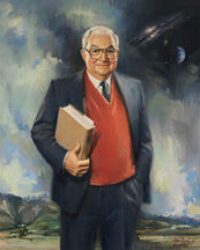
George Brown
Session Voting Records
106th Congress
Subsidizing Abortions
Subsidizing Abortions. Representative Rosa DeLauro (D-CT) proposed a measure that would allow abortions to be included as medical expenses in the health care coverage the federal government subsidizes for its employees. Representative Curt Weldon (R-PA), opposing DeLauro's proposal, explained that "the unborn baby in the womb is not a potential life. It meets all of the criteria of a life, the criteria that I used to use as a practicing physician to determine whether somebody is alive or dead: a beating heart, active brain waves."
Rep. DeLauro's proposal, an amendment to H.R. 2490, was rejected by the House on July 15, 1999 by a vote of 188-230 (Roll Call 301). We have assigned pluses to nays.
National Endowment for the Arts
National Endowment for the Arts. The National Endowment for the Arts currently consumes some 98 million taxpayer dollars annually. A measure proposed by Representative Cliff Stearns (R-FL) would take a small, 2.5 percent bite totaling $2.1 million out of that budget. Rep. Stearns noted that the Founding Fathers did not give the federal government the power under the U.S. Constitution to fund arts programs. "During the Constitutional Convention, Charles Pinckney of South Carolina offered a motion to authorize and 'establish seminaries for the promotion of literature and the arts and sciences.' The motion was overwhelmingly defeated because the framers of our Constitution did not want the federal government to promote the arts with federal funds."
Rep. Stearns measure, an amendment to H.R. 2466, was rejected by the House on July 14, 1999 by a vote of 124-300 (Roll Call 287). We have assigned pluses to the yeas.
Flag Burning Amendment, House Joint Resolution 33
Flag Burning Amendment, House Joint Resolution 33. This measure proposes an amendment to the Constitution stating that "the Congress shall have power to prohibit the physical desecration of the flag of the United States." Representative Charles Canady (R-FL) argued that such an amendment is needed "because the Supreme Court, in its mistaken interpretation of the First Amendment, stripped our flag of the protection to which it is entitled." He is mistaken, however. If Congress truly wishes to rein in the Supreme Court with regard to flag burning and myriad other issues, it can simply exercise its constitutional power to limit the Court's appellate jurisdiction (Article III, Section 2). The House adopted this measure on June 24, 1999 by a vote of 305 to 124 (Congressional Record, pages H4843-44, roll call 252; we have assigned pluses to the nays).
Civil Asset Forfeiture Reform Act
Civil Forfeiture Reform. Under "civil forfeiture," the government seizes property which officials believe is used in the commission of a crime, oftentimes without the property owner being charged with a crime. Existing federal civil forfeiture law makes clear that property owners must bear the burden of proof that their property was not used in the commission of a crime. A measure, introduced by Representative Henry Hyde (R-IL), would curb excesses in federal civil forfeiture takings of property. The Hyde legislation would reverse the burden of proof and require of the government "clear and convincing evidence" that the property was used in the commission of a crime. It also contains an "innocent owner defense" for property owners who were unaware that their property was being used in the commission of crimes.
Rep. Hyde's measure, H.R. 1658, passed the House on June 24, 1999 by a vote of 375-48 (Roll Call 255). We have assigned pluses to the yeas.
Gun Control, H.R. 2122
Freedom of Religion, Amendment to H.R. 1501
Permitting Abortions in Military Hospitals Overseas, Amendment to H.R. 1401
Permitting Abortions in Military Hospitals Overseas, Amendment to H.R. 1401. Representative Carrie Meek (D-FL) offered this amendment to repeal "the statutory prohibition on privately funded abortions in overseas military facilities...." However, those overseas facilities are taxpayer funded. If abortions are allowed there, those facilities would become, noted Representative Henry Hyde (R-IL), "not a place for healing, but an abortion mill, an abortion clinic." The House rejected the amendment on June 9, 1999 by a vote of 203 to 225 (Congressional Record, page H3996, roll call 184; we have assigned pluses to the nays).
No Military Exchanges or Joint Training With the Red Chinese Army, Amendment to H.R. 1401
No Military Exchanges or Joint Training With the Red Chinese Army, Amendment to H.R. 1401. Representative Tom DeLay (R-TX) offered this amendment to the Defense authorization bill to "bar the United States from training the Communist Chinese military." Stressing the need for such a measure, DeLay noted that "President Clinton jump-started American cooperation with the PLA [People's Liberation Army] soon after taking office in 1993. The imbalance in these so-called exchanges is extreme and predictably benefits the PRC [People's Republic of China]." These exchanges have not tapered off since the Chinese nuclear espionage revelations. "Just this year," continued DeLay, "more than 80 cooperative military contacts were planned between the U.S. and Red China." The House adopted the amendment on June 9, 1999 by a vote of 284 to 143 (Congressional Record, page H3995, roll call 182; we have assigned pluses to the yeas).
Agricultural Appropriations, H.R. 1906
Agricultural Appropriations, H.R. 1906. This legislation provides $60.7 billion for "Agriculture, Rural Development, Food and Drug Administration, and Related Agencies" for fiscal year 2000, a $3.4 billion increase over fiscal 1999. The measure includes $21.6 billion for the food stamp program, $20.1 billion for agricultural programs, $4 billion for the Special Supplemental Nutrition Program for Women, Infants, and Children (WIC), $165.4 million for the "Food for Peace" foreign aid program, and $583.4 million for rental assistance. The House adopted the measure on June 8, 1999 by a vote of 246 to 183 (Congressional Record, page H3823, roll call 177; we have assigned pluses to the nays).
Preventing Funding for Development of Any Abortion Inducing Drug, Amendment to H.R. 1906
Preventing Funding for Development of Any Abortion Inducing Drug, Amendment to H.R. 1906. Representative Tom Coburn (R-OK) offered this amendment to prohibit any funds in the fiscal 2000 Department of Agriculture appropriations bill from being used "by the Food and Drug Administration for the testing, development, or approval ... of any drug for the chemical inducement of abortion." The House adopted the amendment on June 8, 1999 by a vote of 217 to 214 (Congressional Record, pages H3811-12, roll call 173; we have assigned pluses to the yeas).
Preventing U.S. Invasion of Yugoslavia, Amendment to H.R. 1664
Preventing U.S. Invasion of Yugoslavia, Amendment to H.R. 1664. Representative Ernest Istook (R-OK) offered this amendment to the Defense supplemental appropriations bill to prohibit the use of any funds authorized therein for "any plan to invade the Federal Republic of Yugoslavia with ground forces of the United States, except in time of war." Representative Cliff Stearns (R-FL) objected to the amendment on the grounds that it was similar to H.R. 1569, and therefore unnecessary. "They are very, very similar," said Stearns. "Do members think they have to make another stand...?" Representative Ron Paul (R-TX) argued otherwise: "It was said that this is the same vote that we had last week, but last week's vote is sitting on the table and it is going to sit there. This one may well go someplace and have an effect." The House rejected the amendment on May 6, 1999 by a vote of 117 to 301 (Congressional Record, pages H2891-92, roll call 119; we have assigned pluses to the yeas).
Authorizing Air Operations for the Kosovo Conflict, Senate Concurrent Resolution 21
Authorizing Air Operations for the Kosovo Conflict, Senate Concurrent Resolution 21.
This legislation would authorize continuing offensive air operations and missile attacks against Yugoslavia. Representative Dennis Kucinich (D-OH) said that "it should be obvious that the President does not need this resolution to use air power because he is already using it" -- an observation that speaks volumes about the failure of Congress to assert its authority by insisting on the removal of U.S. forces.
The House rejected the resolution on April 28, 1999 by a vote of 213 to 213 (Congressional Record, pages H2451-52, roll call 103; we have assigned pluses to the nays).
Removal of U.S. Troops From the Kosovo Conflict, House Concurrent Resolution 82
Removal of U.S. Troops From the Kosovo Conflict, House Concurrent Resolution 82. This measure would direct the removal of the U.S. military from the conflict in Yugoslavia, ending our offensive operations against that nation. Representative Ron Paul (R-TX) noted: "The Serbs have done nothing to us, and we should not be over there perpetuating a war." The House rejected the measure (thereby acquiescing to President Clinton's offensive against Yugoslavia while later hypocritically voting against a declaration of war) on April 28, 1999 by a vote of 139 to 290 (Congressional Record, page H2427, roll call 101; we have assigned pluses to the yeas).
Prohibit Funding of Ground Troops In Kosovo, H.R. 1569
Prohibit Funding of Ground Troops In Kosovo, H.R. 1569. This legislation would prohibit funding of U.S. ground forces in Yugoslavia without prior congressional authorization. At the time of this vote, U.S. forces were already engaged in the air war against Yugoslavia -- without prior congressional authorization. The House adopted the measure on April 28, 1999 by a vote of 249 to 180 (Congressional Record, pages H2413-14, roll call 100; we have assigned pluses to the yeas).
Increasing Foreign Aid Expenditures, Amendment to H.R. 1141
Increasing Foreign Aid Expenditures, Amendment to H.R. 1141.
Representative David Obey (D-WI) offered this amendment to the fiscal 1999 supplemental appropriations bill to reinstate a smorgasbord of foreign aid appropriations that the bill would rescind in order to offset new spending. The Obey amendment would restore $853 million in spending, including: $648 million for multilateral development banks (like the World Bank); $150 million to purchase fissile materials (plutonium) from Russia to keep the Russians from building nuclear weapons; $30 million for the "Food for Peace" program; and $25 million for the Export-Import Bank. The House rejected the amendment on March 24, 1999 by a vote of 201 to 228 (Congressional Record, pages H1644-45, roll call 68; we have assigned pluses to the nays).
Deployment of a National Missile Defense, H.R. 4
Deployment of a National Missile Defense, H.R. 4.
This bill would make it "the policy of the United States to deploy a national missile defense." Representative John Lewis (D-GA) objected to the measure, declaring: "Make no mistake, a dollar more for missile defense is a dollar less for health care, for education, and for food.... I urge my colleagues, do not choose bullets over babies, bombs over books, missiles over medicine." But there was support from the minority party for the measure. Democratic Representative James Traficant (OH) said, "National defense and security is our number-one priority.... I am changing my vote. I am voting for the missile defense system for the United States of America."
The House adopted the measure on March 18, 1999 by a vote of 317 to 105 (Congressional Record, pages H1447-48, roll call 59; we have assigned pluses to the yeas).
Authorizing U.S. Peacekeeping in Kosovo, House Concurrent Resolution 42
Peace Corps Authorization and Expansion, H.R. 669
Peace Corps Authorization and Expansion, H.R. 669.
This bill would authorize $1.3 billion for the Peace Corps through fiscal 2003 -- including $270 million in fiscal 2000, an increase of $29 million over the current level. The new funding would allow for an expansion in the number of Peace Corps volunteers from the current level of 6,700 to 10,000 by 2003.
The House passed the bill on March 3, 1999 by a vote of 326 to 90 (Congressional Record, page H913, roll call 31; we have assigned pluses to the nays).
Designating the Sudbury, Assabet, and Concord as Wild and Scenic Rivers, H.R. 193
Designating the Sudbury, Assabet, and Concord as Wild and Scenic Rivers, H.R. 193.
This bill would designate a combined total of 29 miles of three rivers in Massachusetts as Wild and Scenic under the Wild and Scenic Rivers Act of 1968. Although the bill would prevent the federal government from actually acquiring title or easements for any of the land adjacent to the sections of river in question, through a loophole the government could still acquire such land or easements "under other laws for other purposes." The House passed the bill on February 23, 1999 by a vote of 395 to 22 (Congressional Record, page H679, roll call 23; we have assigned pluses to the nays).
Contact information not available for this legislator.
Create a free account to save legislators to lists and create custom scorecards.
Create Free Account Log inAlready have a Freedom Index/JBS account?
You may add contact information to Scorecards, print and share them.
Do not make unauthorized changes to the Scorecards.
Leave unchecked for no personalization.
Save your contact info to a free account to reuse it on other legislator scorecards.
Save Your Contact Information for Next Time
Create a free account or log in to save multiple contacts for future use.
Search Results

Get the FreedomIndex.us App
Install for faster access, or learn how this app experience works.